Login
Login
 login / signup












Chartres, France
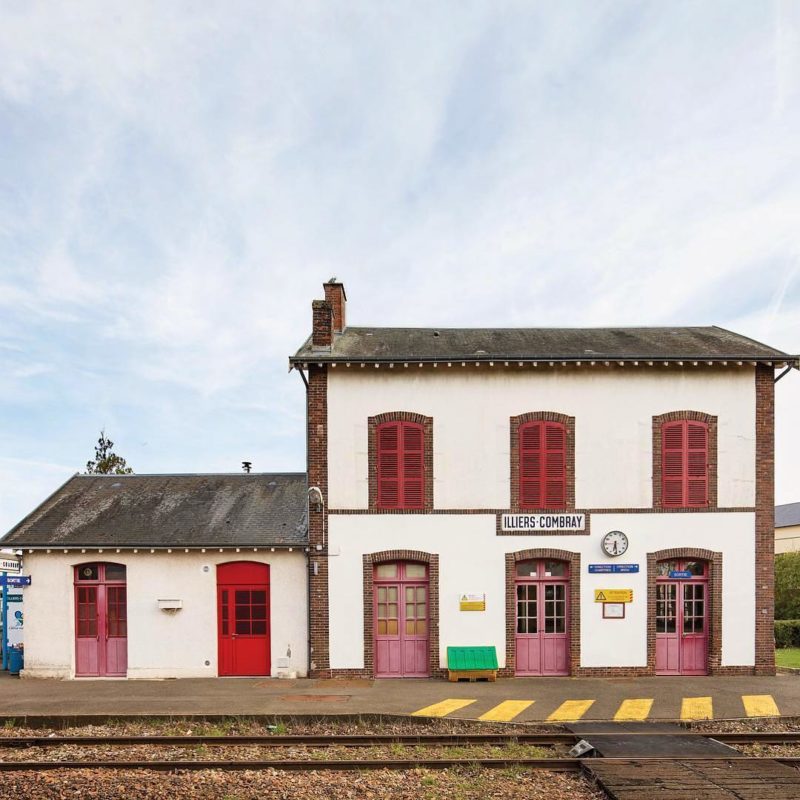
Illiers-Combray Station
This French train station is located in a town renamed after the famed writer Marcel Proust's fictional name for the village.






Valencia, Spain | C.1917

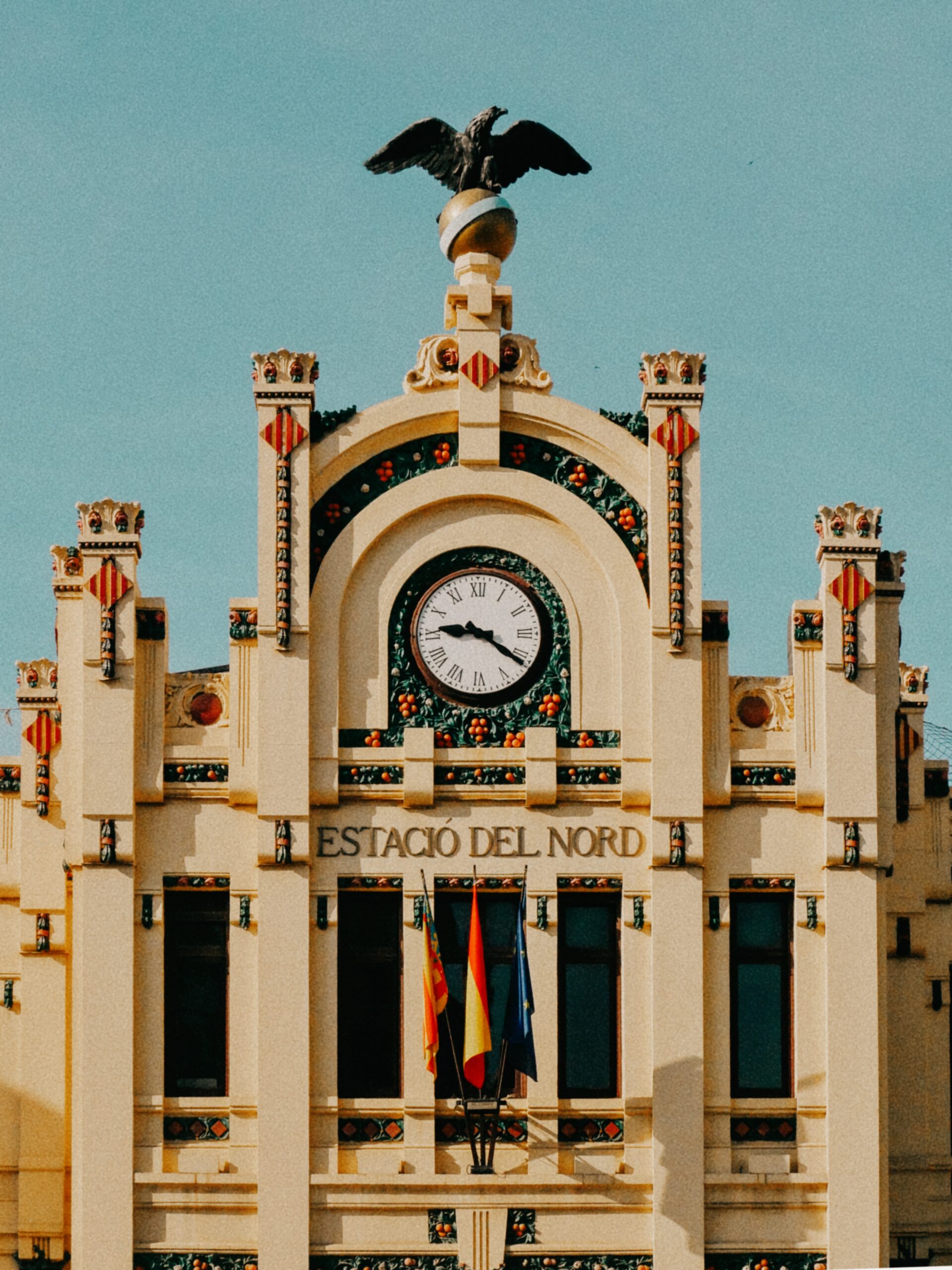
When architect Demetrio Ribes designed València’s Estación del Norte in 1906, he turned a railway terminal into an edible love letter. Every ceramic orange and blossom adorning the façade celebrated the region’s citrus boom, but he also slipped in a personal touch: one of the mosaics depicting women in traditional Valencian dress was modeled after his own sister-in-law, Josefina Momblanch Llopis. The station’s vestibule whispers “buen viaje” in nine languages across its wooden panels, while the former café remains plastered floor to ceiling with trencadís mosaics showing everything from Albufera rice fields to the city’s Miguelete tower.
Construction took until 1917, and what opened that year was a full commitment to excess dressed up as a train station. While the rest of industrial Europe was racing toward efficiency and straight lines, Ribes built a Viennese Secession fantasy over a functioning rail terminal, ornament layered onto engineering rather than stripped away from it. It earned the nickname Valencia’s “most beautiful door,” and for over a century it’s lived up to it, watching a rotating cast of immigrants, soldiers, lovers, and refugees pass beneath its ceramic oranges on their way somewhere else. These days the challenge belongs to Adif, the Spanish rail operator tasked with modernizing a protected monument without disturbing a single tile.
 39.4672354, -0.3766837
Partner


This French train station is located in a town renamed after the famed writer Marcel Proust's fictional name for the village.
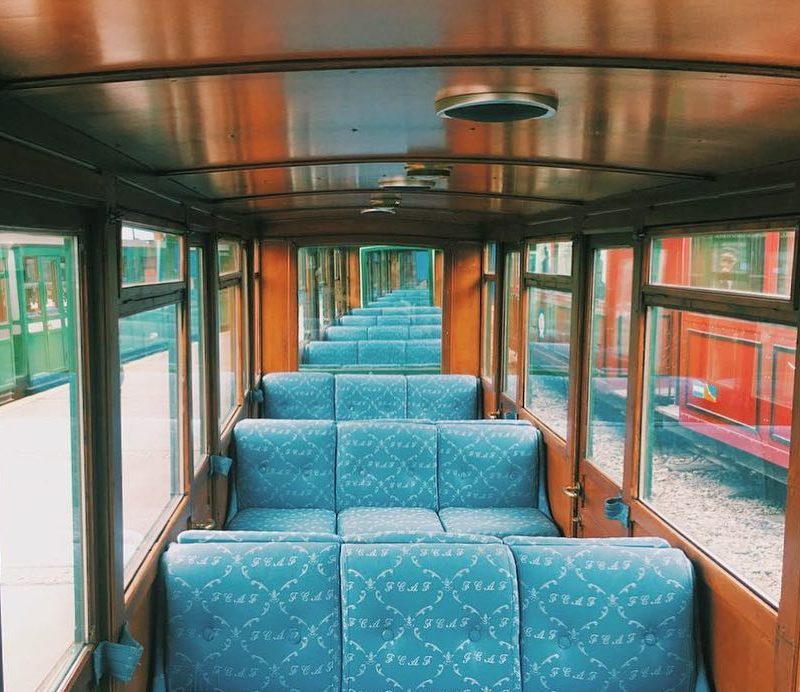
This Argentinian transportation service is known as the "Train of the End of the World".
Max file size is 40MB. JPEGs are preferred.
You do not have permission to view this form.