 Login
Login
 login / signup











Wrigley Field is one of the few places where a goat still gets blamed for workplace performance reviews. In 1945, tavern owner William Sianis brought his pet goat Murphy to Game 4 of the World Series at Wrigley Field, and when both were ejected for odor-related offenses, Sianis allegedly declared the Cubs would never win again. Welp, as luck would have it, the Cubs lost that series to the Detroit Tigers and wouldn’t return to the World Series for more than 70 years. But that was only the half of it, the championship drought itself stretched back even further – to 1908, making it 108 years between titles, the longest in sports history.
Fortunately, the curse belonged to the Cubs, not the ballpark. Long before it became synonymous with the Cubs, it belonged to someone else entirely. Built in just under two months in 1914 as Weeghman Park, it was home to the Chicago Whales of the Federal League. The Whales won a championship in 1915, the league folded immediately afterward, and the Cubs simply moved in. After William Wrigley Jr. acquired the club, the ballpark eventually became Wrigley Field – proving that even famous addresses sometimes have surprisingly anonymous beginnings.
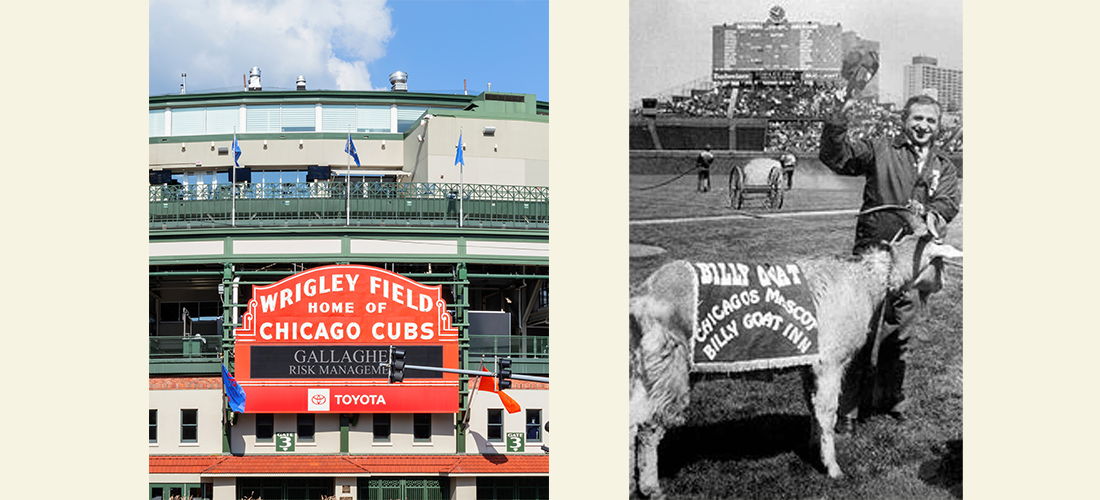
Since then, the ballpark has spent the past century since stubbornly resisting modernization. Boston ivy still blankets the outfield walls, planted in 1937 and never removed. Attendants still climb through a trapdoor in the bleachers to manually flip hundreds of steel score panels in their famous green scoreboard during every game – there’s no restroom up there, which rewards careful hydration planning. Wrigley was the last Major League park to install permanent lights, holding out until 1988. And the neon marquee still glows over the corner of Addison and Clark much as it did in the 1930s. Wrigley refused to become a modern stadium, which is fitting, because it also refused to become home to a champion.
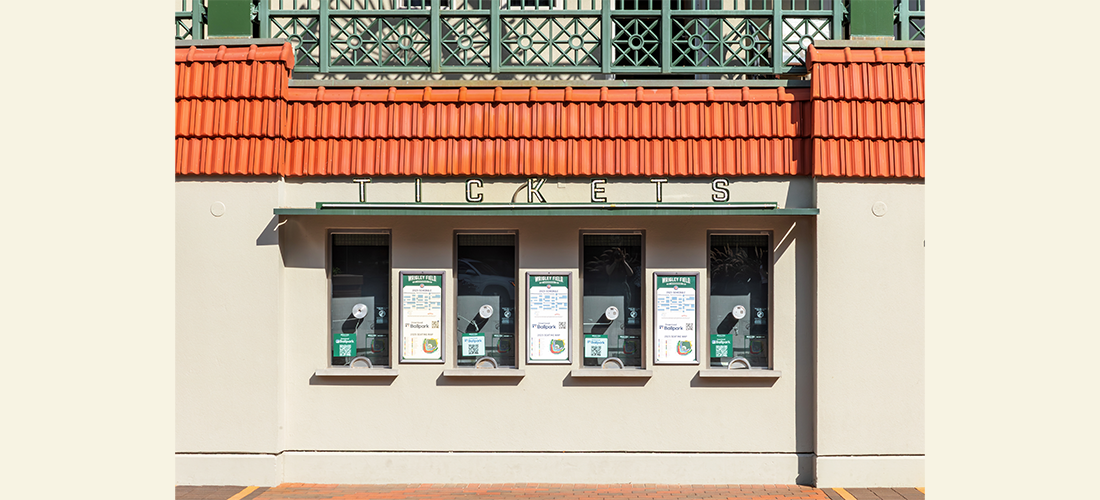
The curse had an uncanny ability to recruit new believers. A star-studded Cubs team collapsed down the stretch in 1969. Another postseason ended in heartbreak in 1984. Then came 2003, when fan Steve Bartman reached for a foul ball, the Cubs unraveled, and Bartman spent years as baseball’s most infamous scapegoat. The baseball itself was eventually purchased at auction, then ceremonially boiled, steamed, stretched, and finally exploded in an attempt to put the whole episode to rest. It was a remarkably elaborate solution to a remarkably imaginary problem. Because, as every Cubs fan knew, it was always the goat’s fault.
Then, on November 2, 2016, Game 7 of the World Series in extra innings and incredible fashion the Cubs broke the curse, winning their first championship in 108 years. Thousands gathered beneath the marquee at the stadium, cheering, celebrating, and signing their names on the old ballpark’s brick exterior. The lovable losers became merely lovable. The goat, naturally, has never commented.