

 Login
Login
 login / signup





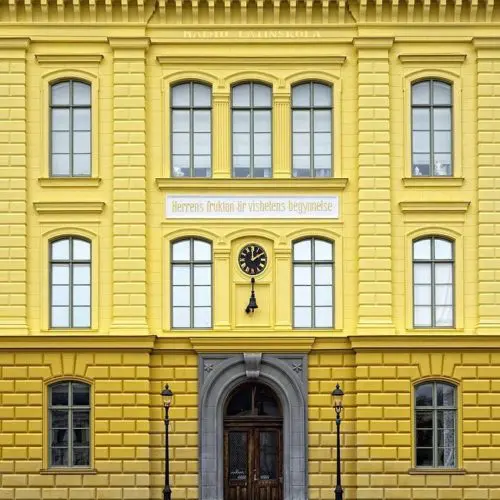








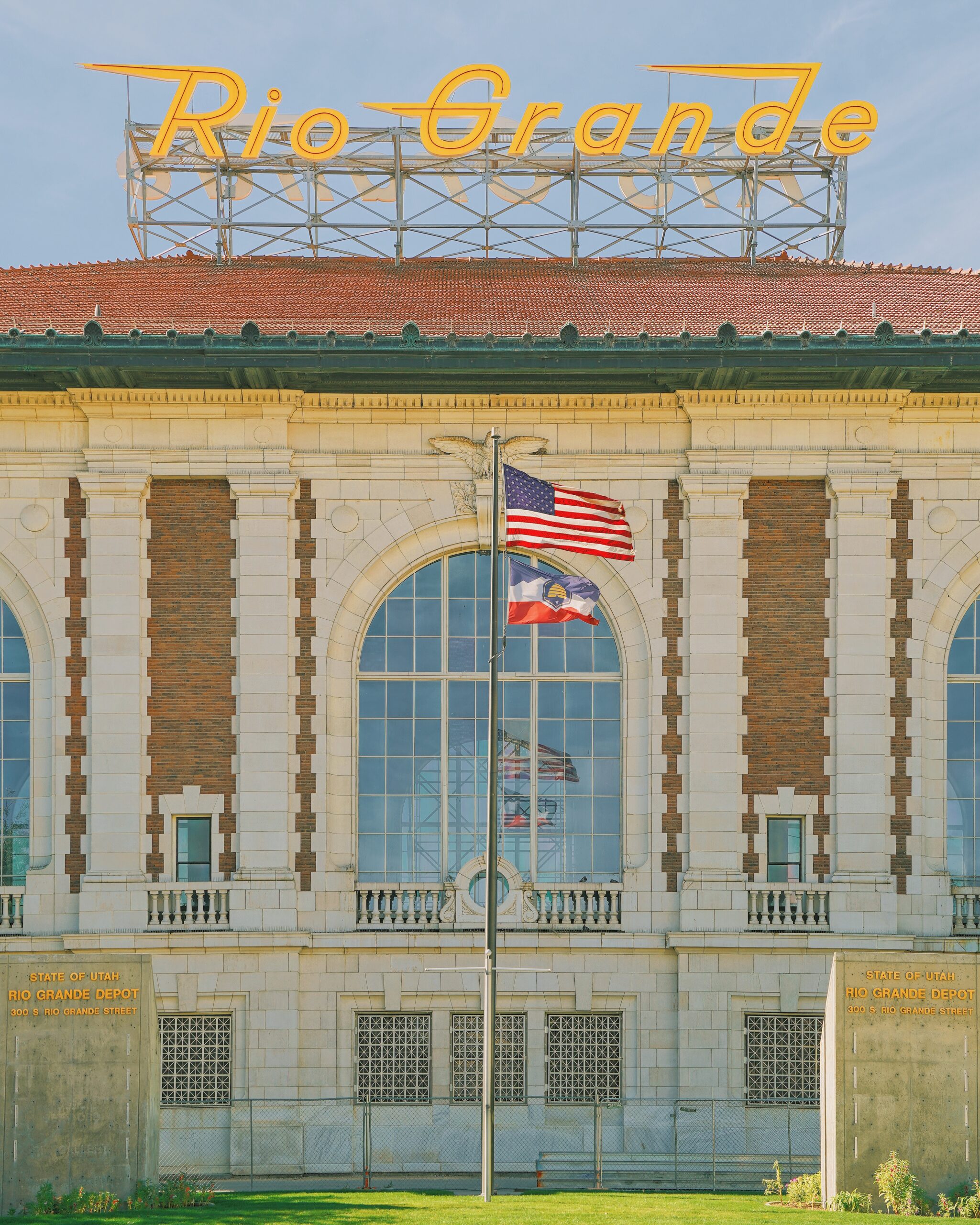


The Denver and Rio Grande Western Railroad spent $750,000 in 1910 to build a train station specifically designed to outshine their competitor – then sold it for a dollar in 1977.
The competitor was the Union Pacific Railroad, which had opened its own Salt Lake City depot the previous year for $300,000. The Denver and Rio Grande Western responded by commissioning a yellow Beaux Arts monument that cost more than twice as much, designed to announce that they weren’t merely arriving in Salt Lake City – they were dominating it. The architect they hired was Henry Schlacks, a Chicago designer known primarily for Catholic churches. Schlacks had trained at MIT and worked in the offices of Adler & Sullivan before spending his career designing ecclesiastical buildings across Chicago: St. Ita, St. Paul, St. Mary of the Lake. He earned the nickname “the master of Catholic church architecture in Chicago.” Then his brother, who happened to be the D&RGW’s vice president, hired him to design a train station in Utah.
The relationship was fraught. Schlacks and the railroad fought primarily over his pay, disputes that delayed construction and created tension between the architect and his own sibling’s company. The depot opened anyway in 1910, a cathedral to transit instead of faith.
The building served its purpose for decades. During World War II, the depot processed 15 to 20 trains daily, primarily transporting military personnel. It became a central point for shipping soldiers off to war in both World War I and World War II. From 1986 to 1999, it served as Salt Lake City’s Amtrak station. But by the end of the century, passenger rail had moved elsewhere. In 1999, Amtrak relocated to the Salt Lake City Intermodal Hub, and the tracks near the Rio Grande Depot were permanently removed.
The building the railroad had spent three-quarters of a million dollars constructing to assert dominance had become a liability. In 1977, decades before the tracks were removed, the D&RGW sold the depot to the State of Utah for one dollar.
Today the building houses the Utah State Historical Society and its research center, the Utah Department of Heritage & Arts, and the Rio Gallery. In 2020, the depot was damaged during the Salt Lake City earthquake, forcing tenants to temporarily relocate. That same year, a group of citizen professionals proposed the “Rio Grande Plan” – a $300-500 million proposal to reopen the depot as Salt Lake City’s main passenger rail and bus terminal, moving downtown rail traffic underground and restoring the building to its original transportation purpose.
The depot that was built to outshine a competitor, then abandoned by the company that commissioned it, may yet become a transit hub again. Though this time, nobody’s trying to dominate anyone. They’re just trying to bring the trains back.
 40.76294, -111.9044423

Know more? Share with the community!
Submit Your ImageLogin/Sign Up.