Login
Login
 login / signup












Murcia, Spain
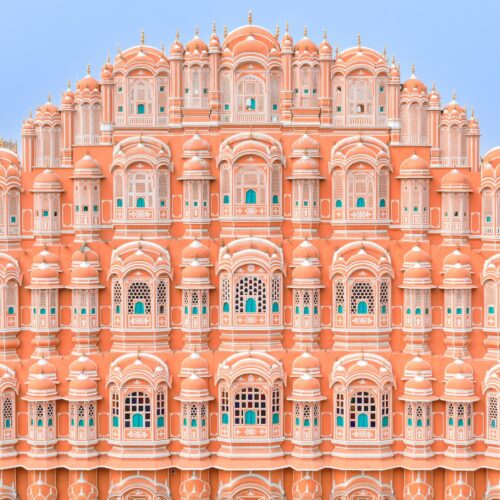
Teatro de Romea
This resilient theater has weathered two destructive fires, and continues to be one of the most important cultural centers throughout Spain.





Buffalo, New York | C.1920

Partner

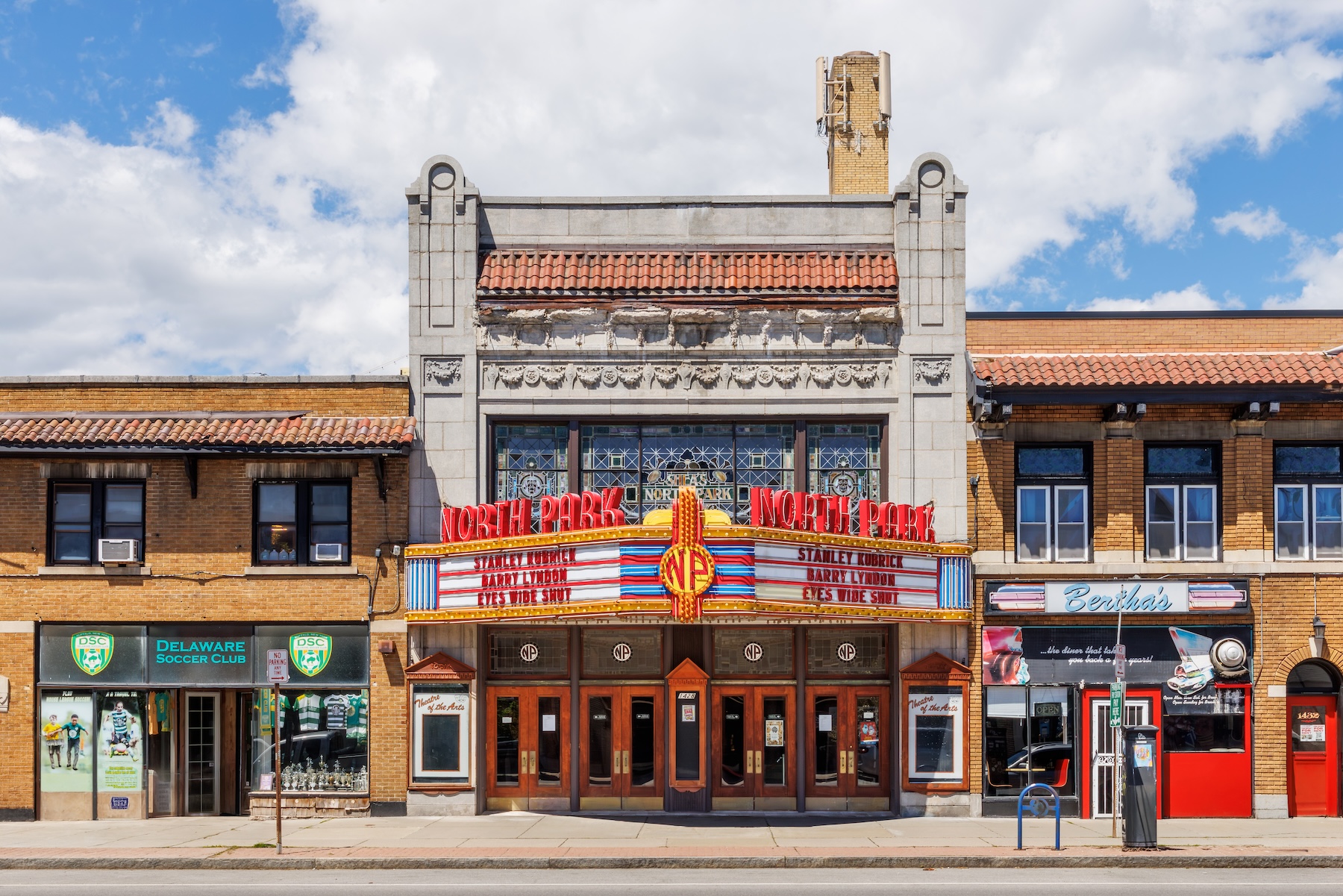
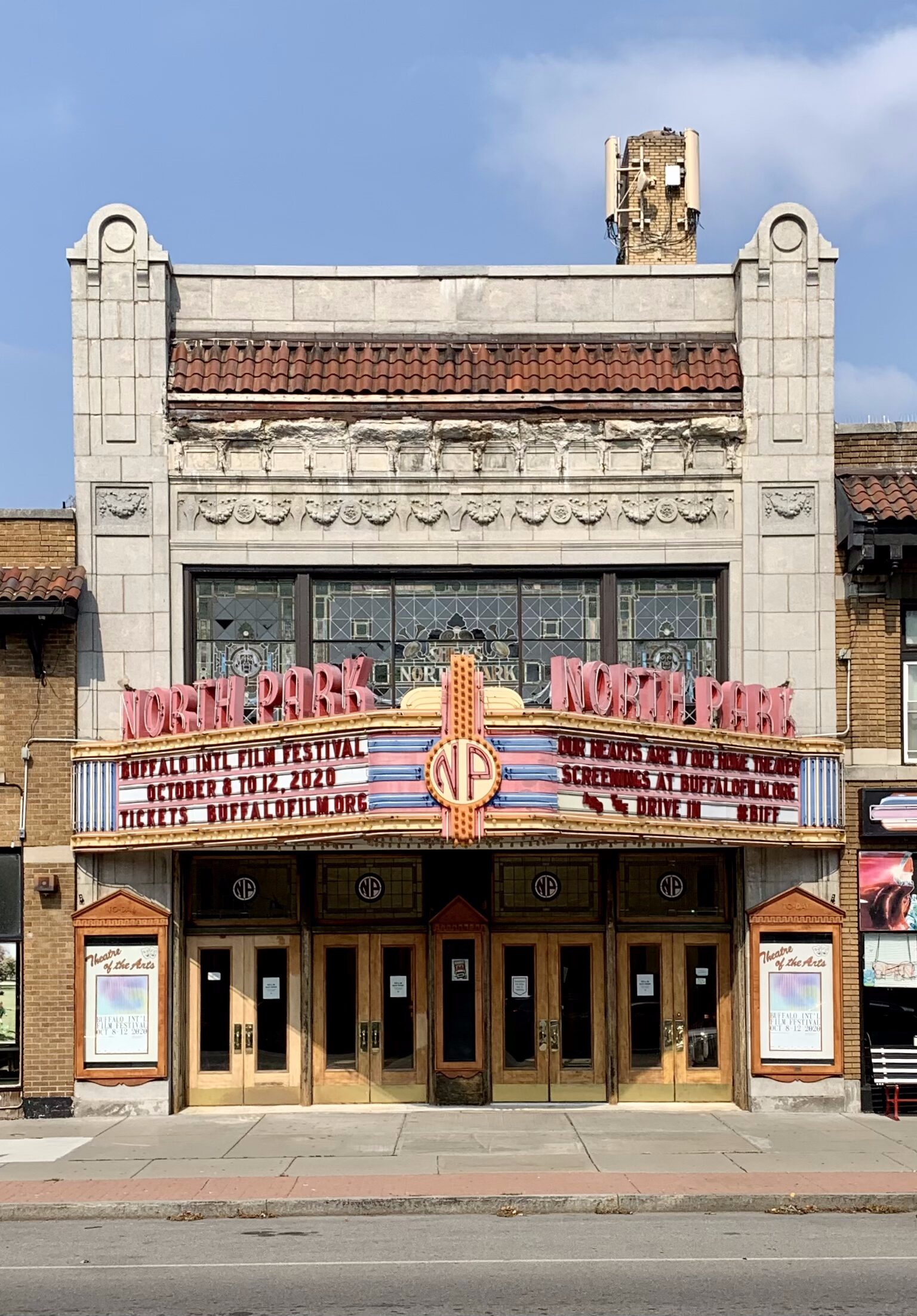
The last survivor of Michael Shea’s Buffalo theater empire opened its doors on November 21, 1920, and the Buffalo Evening Times declared it rivaled “in beauty and appointment that of any opera house in America.” That wasn’t hyperbole.
Six massive Art Nouveau murals by Raphael Beck, painter of the 1901 Pan-American Exposition, crown the proscenium and dome the ceiling in five layered panels, depicting stylized scenes from Classical mythology. The Art Deco marquee arrived two decades later, in 1941, with the “Shea’s” name proudly remaining long after ownership changed hands. Michael Shea himself, a former bartender turned vaudeville magnate, built an entertainment empire that stretched across Western New York before his death in 1934. The North Park was his neighborhood palace, smaller than his grand downtown flagship, but no less opulent.
For decades, tobacco stains obscured Beck’s work and a concrete panel hid the stained glass window above the marquee. The theater cycled through owners and programming: silent films gave way to talkies, talkies to second-run features, second-run to art house fare. By the 1990s, it had become Buffalo’s home for independent cinema, a scrappy holdout in the multiplex age.
Then in 2013, a defense attorney and a restaurateur bought the building and launched an eight-month restoration that returned the plaster dome and proscenium to their former glory. The stained glass reemerged. The murals breathed again. In 1998, Vincent Gallo held the world premiere of Buffalo ’66 here, Christina Ricci and Asia Argento in attendance. The prodigal son returning to his hometown theater, screening a film about never being able to leave Buffalo, inside a building that never left either.
 42.9479257, -78.8553613
This resilient theater has weathered two destructive fires, and continues to be one of the most important cultural centers throughout Spain.
This prestigious university has been educating Germans for nearly 150 years.
This public university in Pennsylvania is one of the last bastions of formal poetry in the U.S.
Max file size is 40MB. JPEGs are preferred.
You do not have permission to view this form.