Login
Login
 login / signup










Aarhus, Denmark
City Hall
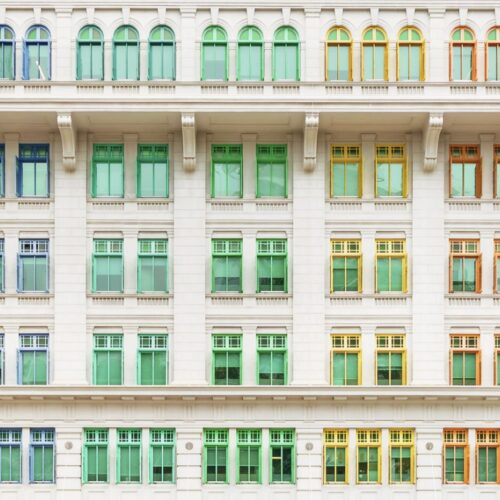
For over 70 years this city hall has operated as the political and civic center of Aarhus, Denmark, and continues to be a symbolic representation of democracy.





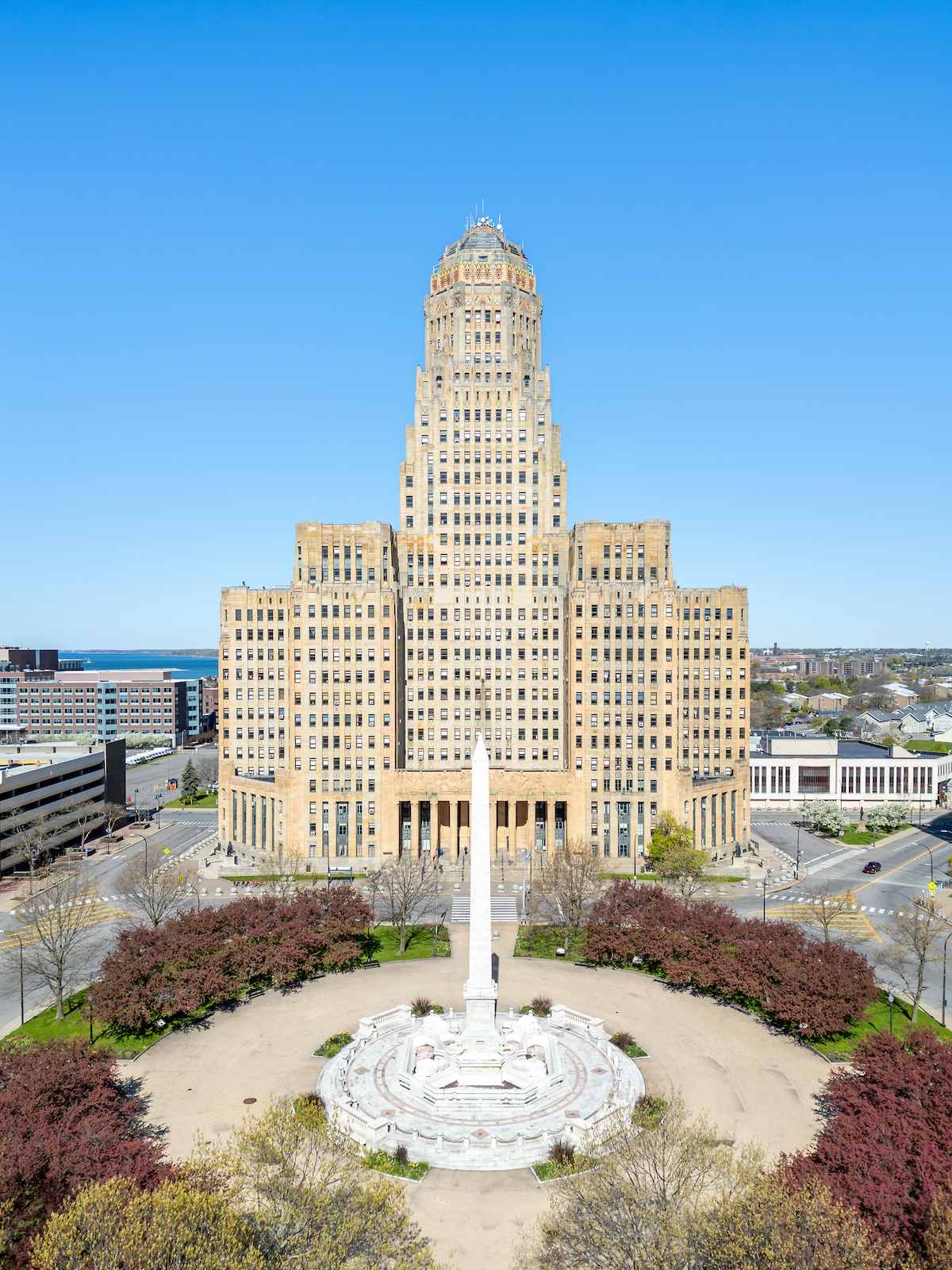
Buffalo, New York | C.1931

Partner

Ground was broken on September 16, 1929, and the building was completed for occupancy on November 10, 1931, dedicated on July 1, 1932, for Buffalo’s 100th birthday as a city. The total cost was $6,851,546.85, making it at the time one of the most costly city halls (and birthday presents) in the country. When asked to describe the building’s style, architect John Wade called it “Americanesque, 1927,” and at other times Babylonian.
The caissons supporting the entire structure were sunk far deeper than needed, allowing John Wade to draw in February 1927 a view of what City Hall might look like in 2427 AD, five hundred years later. All 1,520 windows open inward, making window washers unnecessary. The twelve pillars in the Common Council Chamber were originally intended to hold busts of prominent Buffalonians, but the Council could not agree on who should be represented, and architect Wade intervened to substitute civic virtues instead. When asked on September 6, 1931, why Honesty, Efficiency and Economy were missing from the virtues, Wade replied that if members lived up to the listed qualifications, “the public need not worry.”
The building didn’t just skip air conditioning, it engineered its way around needing it. Vents on the west side were built to catch prevailing winds off Lake Erie, funneling them down through ducts to the basement, where the ground itself cooled the air before it circulated through the building. No compressors, no electricity, just Buffalo’s wind doing the work for free, decades before anyone thought to call that sustainable design. See, the public truly need not worry about Efficiency being represented!
 42.8866413, -78.8793539
For over 70 years this city hall has operated as the political and civic center of Aarhus, Denmark, and continues to be a symbolic representation of democracy.
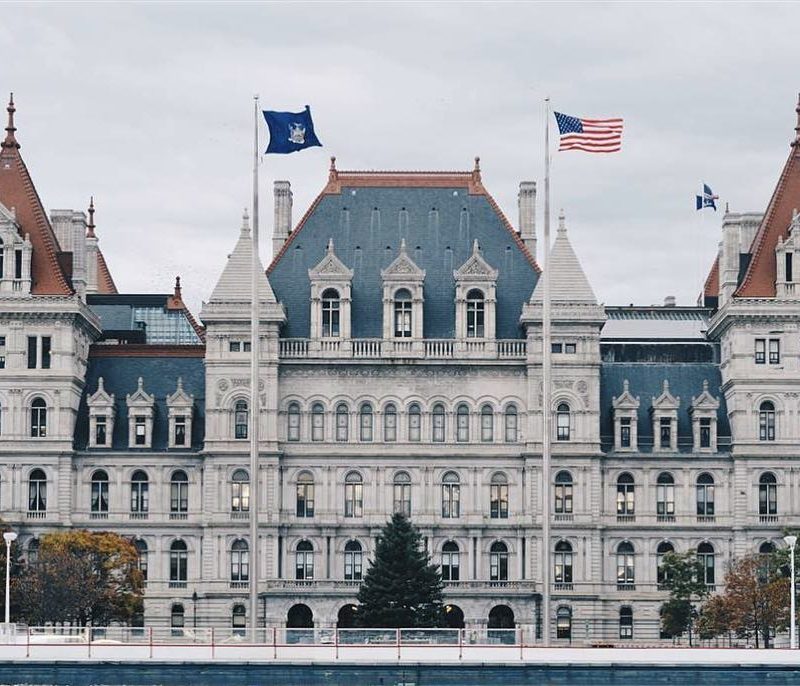
This state capitol building, constructed by three architects in different styles, still stands today thanks to an exterior staircase supporting the Eastern façade.
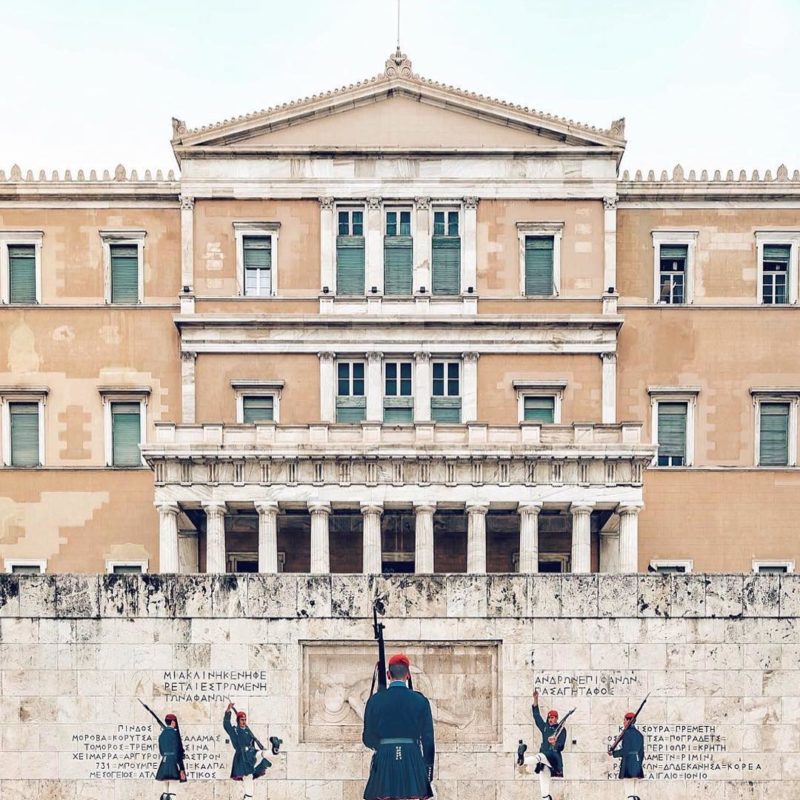
This is the first royal palace of modern Greece and current home of the Greek Parliament.
Max file size is 40MB. JPEGs are preferred.
You do not have permission to view this form.