

 Login
Login
 login / signup




















Partner

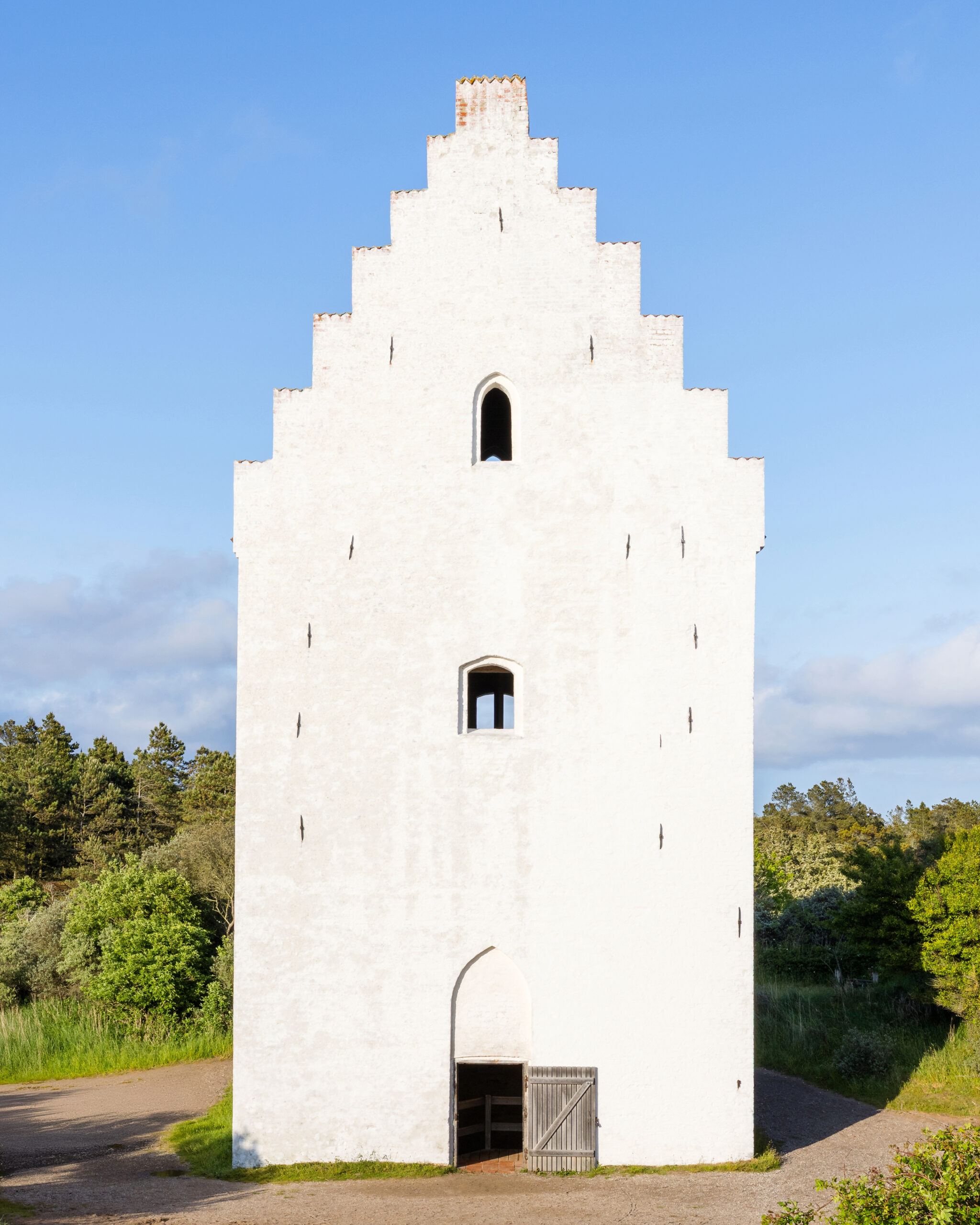
Cresting above the dunes of Skagen’s beaches stands a strikingly white ruin of a church long gone. At times looking like it might be swallowed by the sandy shore, centuries ago, it was home to a prosperous church community who were very committed to sitting in its pews. For this parish, sometimes digging in to one’s beliefs became quite literal.
First dedicated to St. Lawrence of Rome, the church was built of brick in the 14th Century, making it one of the oldest buildings in Skagen. While it may rest right on the shore today, when first built, it was safely tucked away from the shifting sands as most would think a permanent structure on the beach isn’t the best idea, even back then. Well, unfortunately for the structure and its parishoners, desertification
Well, unfortunately for the structure and its parishoners, desertification began to take hold around the church due to the movements of the North Sea. This is when the old religious structure began to truly earn the nickname “The Sand-Covered Church.” By 1775, churchgoers had to dig into the sand in order to open the building’s doors and attend mass—talk about commitment! Shoveling occurred on Sundays for over twenty years, until the church was finally closed in 1795 by the Danish Royal Crown.
While the rest of the church was torn down in the 19th Century, the whitewashed front tower was kept in place as navigational landmark. Local experts believe that the baptismal font and altar continue to survive buried under the sand. So don’t be surprised to find some religious infrastructure next time you’re digging and making sandcastles at the Skagen beaches!
Looking to read more about this area of the world? This location exists in a guide:
Read the Guide 57.7136254, 10.5505668
Know more? Share with the community!
Submit Your ImageLogin/Sign Up.