 Login
Login
 login / signup

















Every Tuesday and Saturday morning, around 170 vendors descend upon Piazza Cavalieri di Vittorio Veneto in Aosta, a city so dense with Roman ruins that it has been nicknamed the Rome of the Alps, which is either civic pride or a reasonable description of a place where you can buy socks twenty meters from a triumphal arch. The square transforms into a working catalog of the region: Fontina cheese wheels, Lard d’Arnad, mocetta, household linens, and the particular energy of a market that has been happening here for long enough that no one can quite remember when it started.
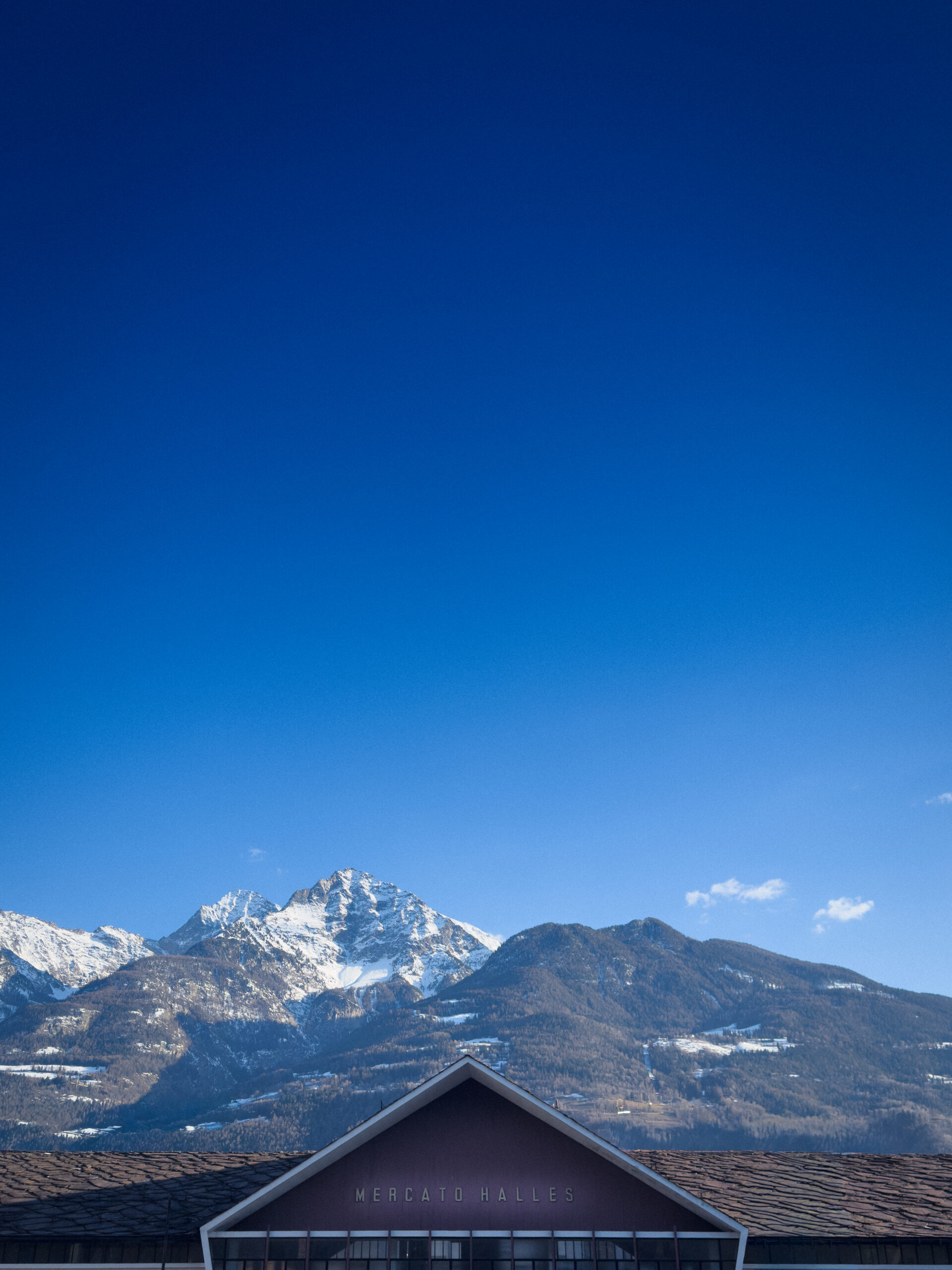
Inside the covered hall, Coldiretti producers handle the zero-kilometer end of things: honey, wines, and alpine specialties that do not travel well and are therefore best encountered here. The backdrop, visible from nearly every stall, is a wall of snowcapped peaks framing mid-century signage in a combination that should not work as well as it does. Aosta sits at the crossroads of Italian, French, and Swiss culinary traditions, which means the market functions less like a regional showcase and more like a three-country collision staged in a valley of 34,000 people. The city supports 43 street markets in total, a number that suggests either extraordinary civic organization or a population with strong opinions about fresh produce.
The Aosta Valley remains, by Italian standards, relatively undiscovered, which is the kind of thing that is both true and temporary. For now, the Tuesday and Saturday crowds are the right size: enough vendors to get lost among, few enough tourists that the Fontina producers are still mostly talking to locals.
 45.7362968, 7.3251685