 Login
Login
 login / signup















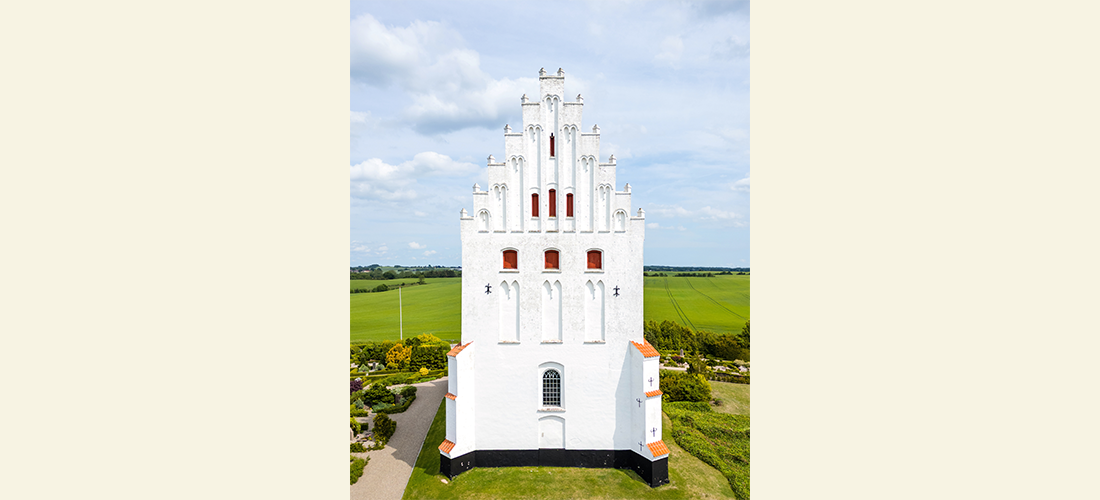
Good news coming out of bad news can be hard to come by–but for this church, it was fated. Resting in solitude on top of Danish hill, this brilliant white “hermit” has stood as a landmark to locals for over eight centuries without any accompanying village. Due to its high position, the church has achieved a lighthouse-like status amongst sailors passing through the nearby Little Belt, and surprisingly, through a little disaster, it was able to shine a new light on the region’s history.
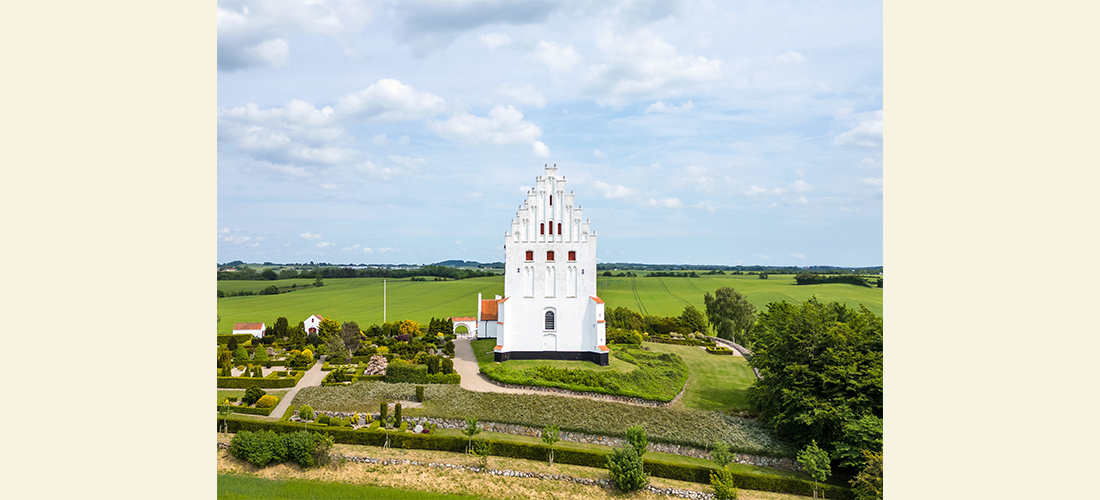
While extensions have been added over the centuries, the original Kærum Church structure dates back to the 12th Century. The lion, a symbol of Jesus, carved into the chalky stone above the entrance, is believed to be from the original structure, and the granite Romanesque baptismal font is also attributed to the same period.
The stark white church was also once home to a unique seating arrangement. In 1790, the parish had grown so large that space was limited within the old walls of the sacred building. To combat this, parish officials assigned seating to families, with seating distributed based on each parishioner’s landholdings. Sitting in the wrong spot could cost someone a significant amount of eight shillings, along with a small cost of public embarrassment.
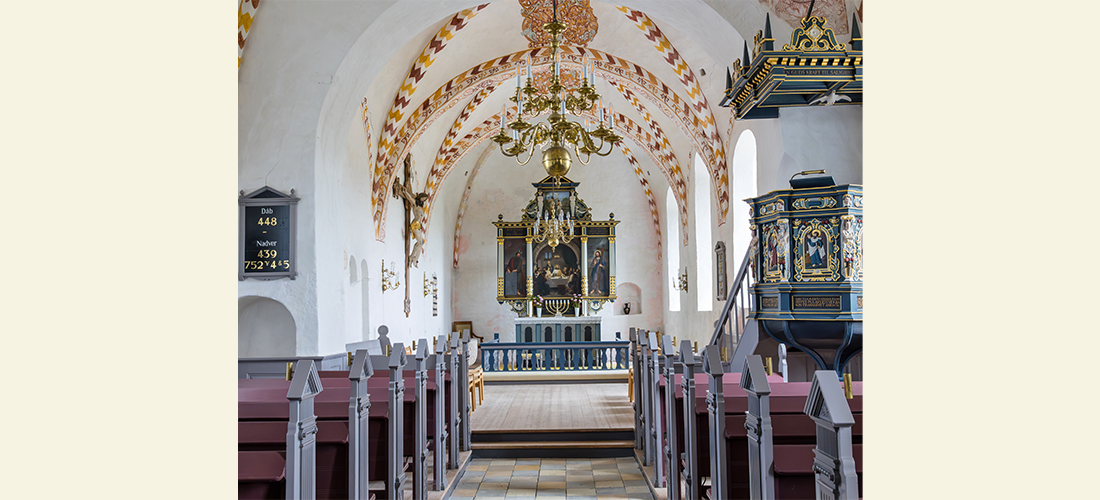
In 1981, a fire broke out in the church’s vestibule. While causing some structural damage, the event luckily also led to the discovery of several frescoes dating to three different periods of the church’s history. Two of the decorations date back close to the building’s founding, while other artworks have been dated to the 15th to 16th Centuries.
Serving as a living museum and house of worship, the stunning stepped gables of Kærum continue to rise above the countryside, serving as a beacon to local ships and tourist rental cars alike. These days, however, visitors can sit wherever they wish.