 Login
Login
 login / signup



















Back in 1935, Italian alpine skier Paula Wiesinger showed up to one of the world’s most prestigious ski mountaineering races – not as a competitor, but as a spectator. She wanted to compete, but just one problem: Women weren’t allowed to race. That changed when contestant Giusto Gervasutti was forced to withdraw due to injury, Wiesinger saw an opening. She borrowed his military uniform, cap, and sunglasses, and successfully snuck into the all-male Trofeo Mezzalama race. She made it halfway up the mountain before officials caught her at a checkpoint and disqualified her. But by then, she’d already etched herself into ski mountaineering legend.
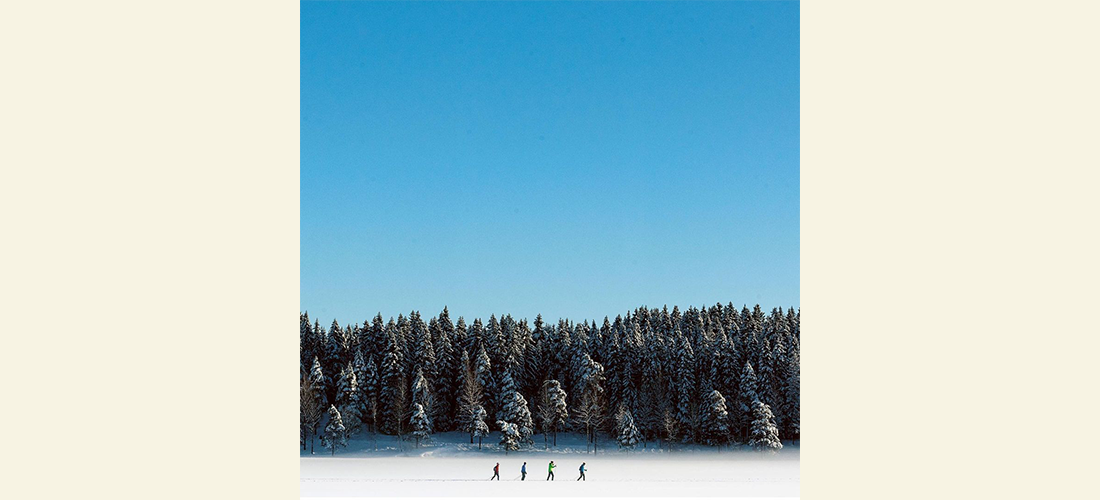
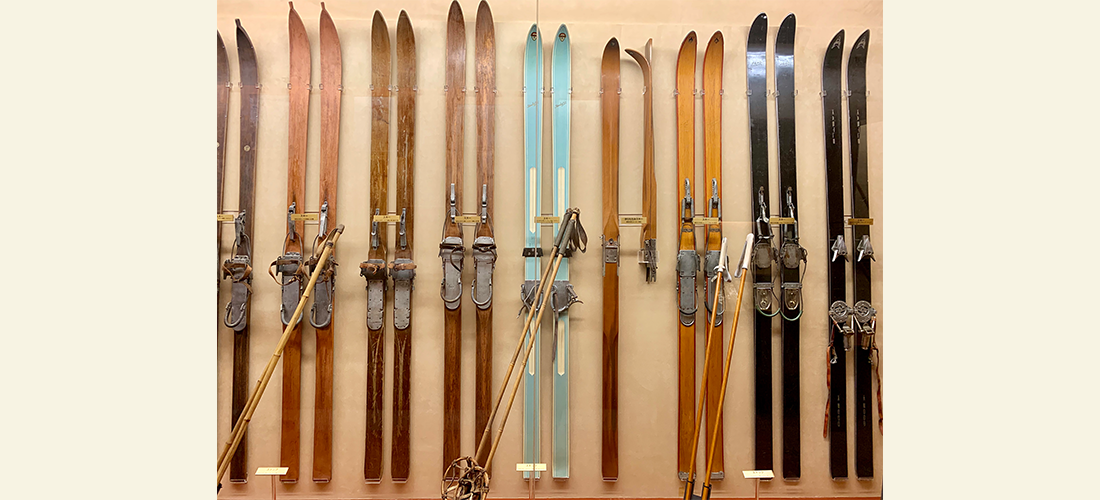
The race Wiesinger crashed was named after the “Father of Ski Mountaineering”, the one & only Ottorino Mezzalama. The legendary race takes place in Italy’s Aosta Valley and is one of the oldest and most prestigious competitions in the sport – a grueling test that requires participants to climb their way to a high point, then ski as fast as they can back down to an awaiting crowd. Mezzalama himself was a pioneer who helped transform what had been a practical means of alpine travel into a competitive discipline. Before races like his, skis were simply used for soldiers to cross snowy terrain, locals to reach remote villages, and people to move through mountains during the winter – less podiums, more survival.
The mechanics of ski mountaineering – known by pros as “SkiMo” – are as straightforward as they are exhausting. Using specialized grip gear on their skis, competitors shuffle as fast as they can up the mountain, racing and dodging through obstacles, with a final snowy stair climb to reach the highest point of the course. After this kind of ascent, many folks would be thankful for the existence of a ski lift. But for these athletes, this is only the halfway point – gravity, it turns out, is the reward. Ripping off the grip skins from their skis, they begin their rapid descent, erasing all the elevation they’ve just climbed in a final dash for the finish line.
📸: Kay Gulledge
For nearly a century, SkiMo competitions have been a fixture mainly in the Alps. The sport has grown from a handful of regional races to a global circuit, with events now held everywhere from the Pyrenees to the Rockies. But despite its devoted following, SkiMo has remained relatively underground – a niche discipline that thrives in mountain towns but rarely makes international headlines. Until now.
This year marks the first time ever that SkiMo will be included in the Winter Olympics. The 2026 Milano Cortina Games are bringing the sport back to Italian soil, where so much of its competitive history began. The ski mountaineering events will take place in Bormio, a mountain town in the Italian Alps where skiing tradition stretches back centuries – a fitting stage for this Olympic debut. Competitors will race in men’s and women’s sprints, plus a mixed team relay, all in front of a global audience that’s likely never heard of the sport. For SkiMo athletes and fans, it’s a chance to prove that a discipline born from necessity — getting up a mountain and back down alive – deserves its place among the world’s most celebrated winter events. Ski skins will be stripped, zigzag patterns in the snow will be climbed, but this time, there’s probably a low chance of any secret substitutions.