
 Login
Login
 login / signup














The word altiport – a specialized, high-altitude airport built for mountainous terrain – didn’t exist until 1961, when French aviator Michel Ziegler persuaded the mayor of Courchevel that the Alps needed something new: a runway wedged directly into the mountains. The result was the world’s first purpose-built high-altitude airport – a 537-meter strip with an 18.6% gradient and no go-around procedures. Overshoot your landing and the surrounding peaks eliminate any second chances. Even today, pilots require special certification just to attempt it.
The airport wasn’t built out of necessity. Courchevel already had trains and roads. What it wanted was something else entirely: a way for visitors to arrive by private plane. Infrastructure as announcement.
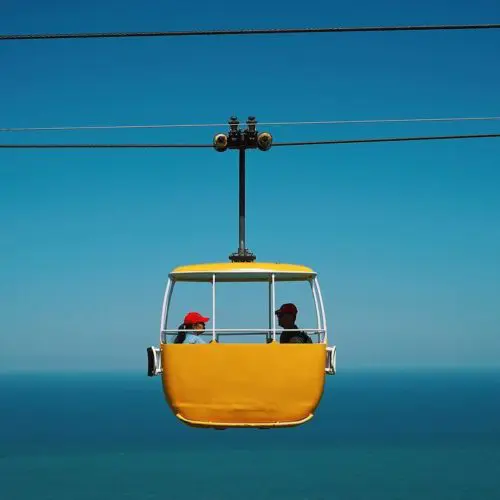
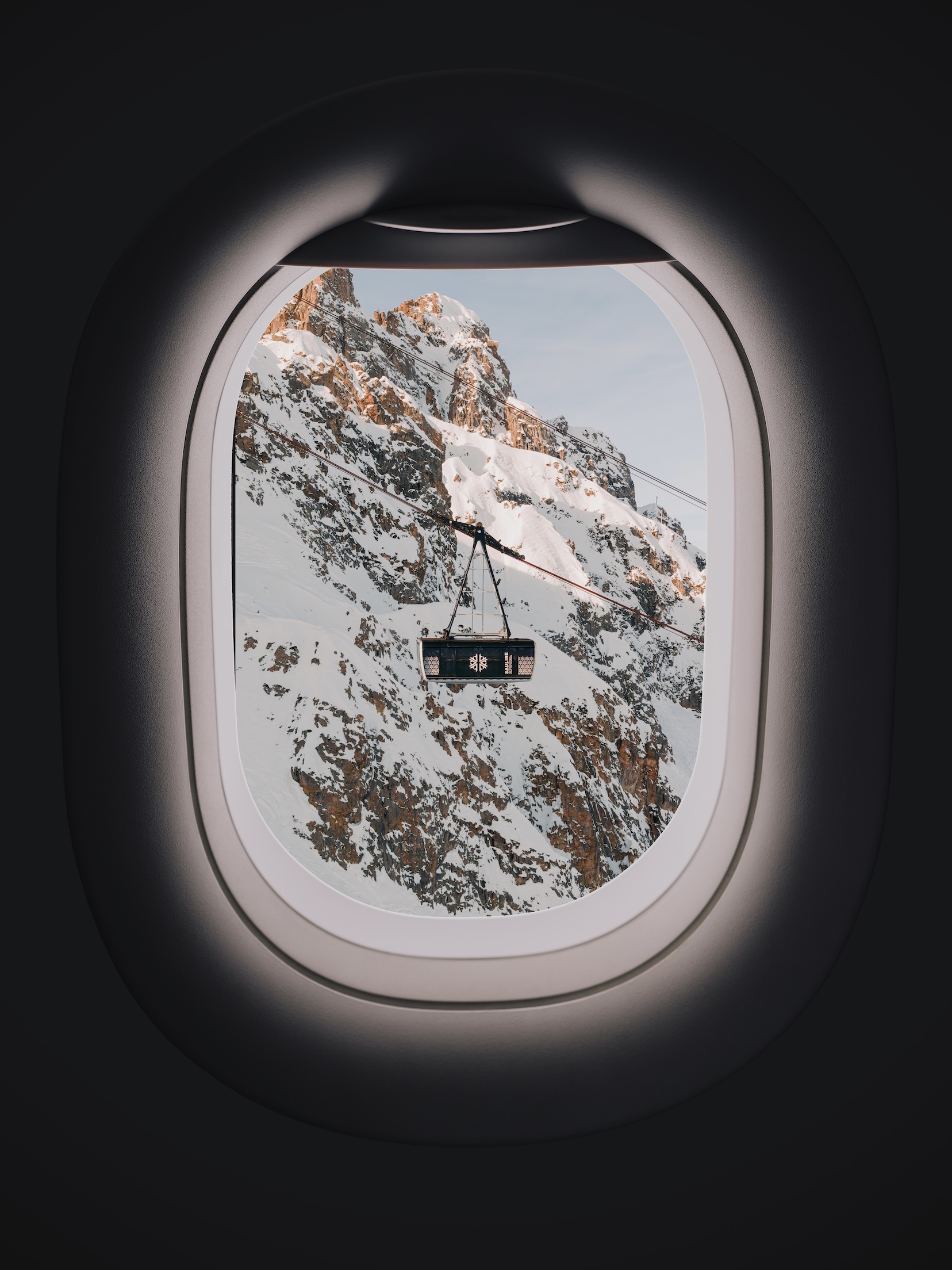
Two decades later the message continued upward. In 1984 the Saulire cable car opened above the resort, then the largest in the world, carrying 160 passengers at a time in black gondolas marked with snowflakes to the summit at 2,712 meters. If the altiport delivered guests sideways through terrain, the cable car carried them vertically through air.
Both systems operate under the same alpine principle: precision, gravity, and very little margin for error.
That reality became clear in October 2021, when the Saulire cable car – during pre-season testing – crashed into its own station. The accident occurred without passengers, but the damage was significant: €9 million and three years of repairs before the gondola reopened in December 2024.
Today the two structures remain Courchevel’s most theatrical arrivals: one runway angled sharply toward the sky, one cable car climbing into it. Both require special certification, €9 million maintenance budgets, and the kind of confidence that comes with eliminating backup plans.
 45.415284, 6.634406999999999