 Login
Login
 login / signup


















In January 1948, George W. McLaurin, a 61-year-old retired professor, applied for admission to the University of Oklahoma to pursue a doctorate in education. He held a master’s degree from the University of Kansas and had taught at Langston University for 33 years. On February 2, 1948, the university denied his application solely because McLaurin was Black. At the time, an Oklahoma law made it a misdemeanor to operate, teach at, or attend an educational institution that admitted both white and Black students.
After McLaurin sued, a federal court ruled the university’s refusal unconstitutional. The Oklahoma legislature quickly amended the law to permit Black students to enroll—but only “upon a segregated basis.”
/ 2
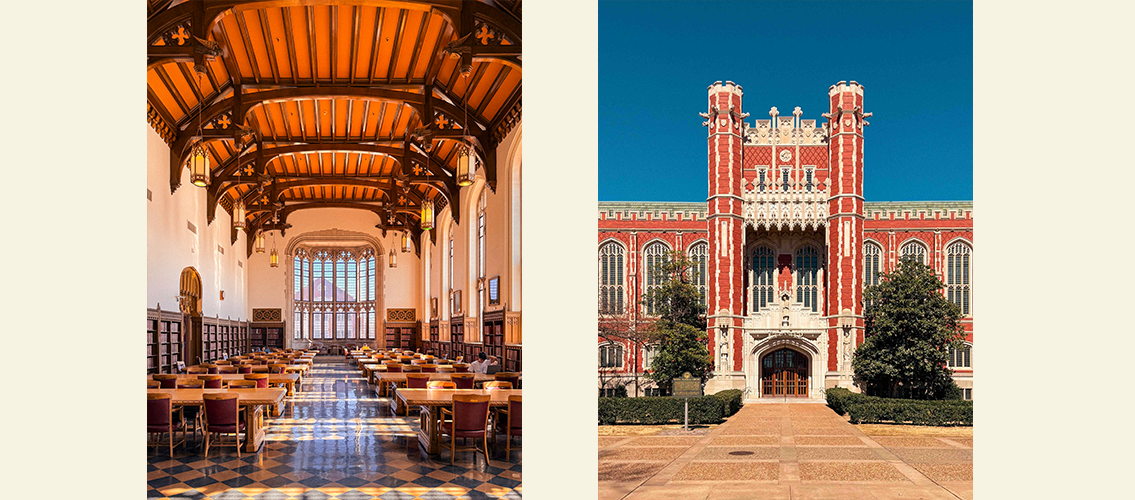
University president George Lynn Cross got creative with compliance. McLaurin was forced to sit with his desk and chair outside the classroom in the hallway next to the door so he could listen to lectures while maintaining separation from white students. In Bizzell Memorial Library, he sat at his own desk behind a stack of newspapers so he would not be seen by white students. An alcove labeled “reserved for colored” was designated for his use. He ate at a separate table in the cafeteria at a different time than his classmates.
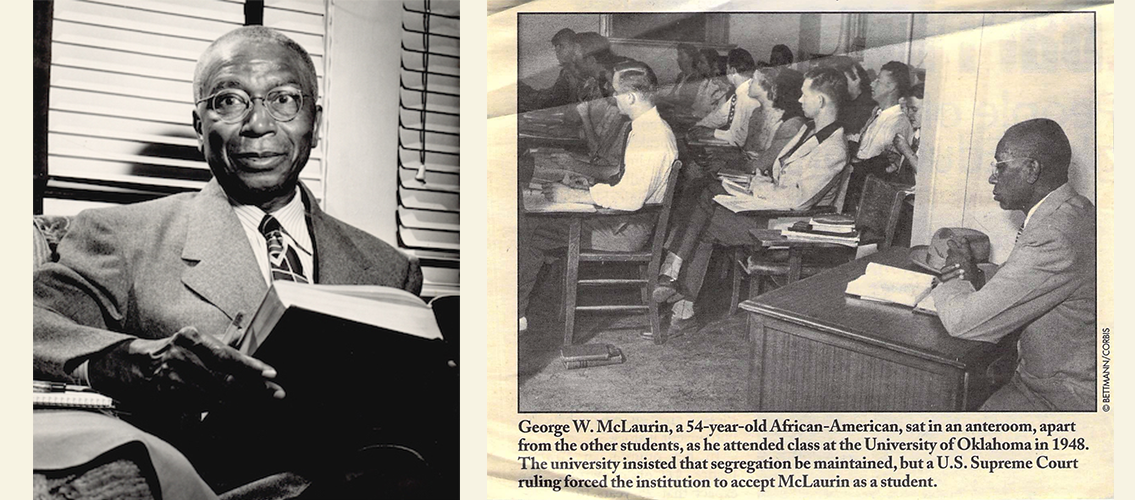
Mr. George McLaurin
McLaurin had won admission, but not equality. He filed another lawsuit, and on June 5, 1950, the United States Supreme Court ruled unanimously in his favor. Chief Justice Fred Vinson wrote that such restrictions “impair and inhibit his ability to study, to engage in discussions and exchange views with other students, and, in general, to learn his profession.” Together with Sweatt v. Painter, decided the same day, the case marked the beginning of the end for the “separate but equal” doctrine.
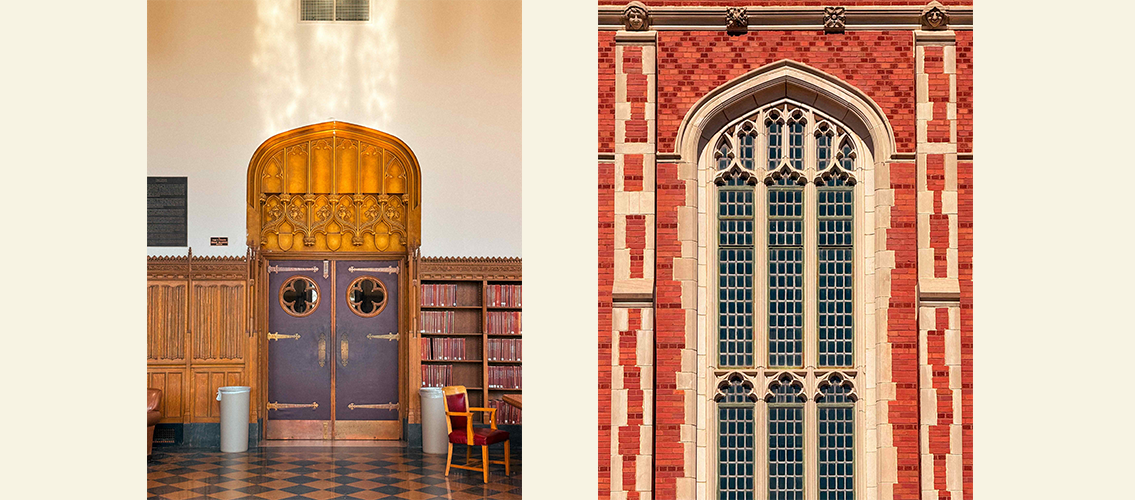
McLaurin never completed his doctorate at the University of Oklahoma, but his legacy endures. In 2001, Bizzell Memorial Library was designated a National Historic Landmark for its role in the desegregation of American higher education. Today, the five-story Cherokee Gothic building is filled with students of every background studying, discussing, and exchanging views—proving that even libraries designed to keep people quiet can make quite a bit of noise when history demands it.