
 Login
Login
 login / signup














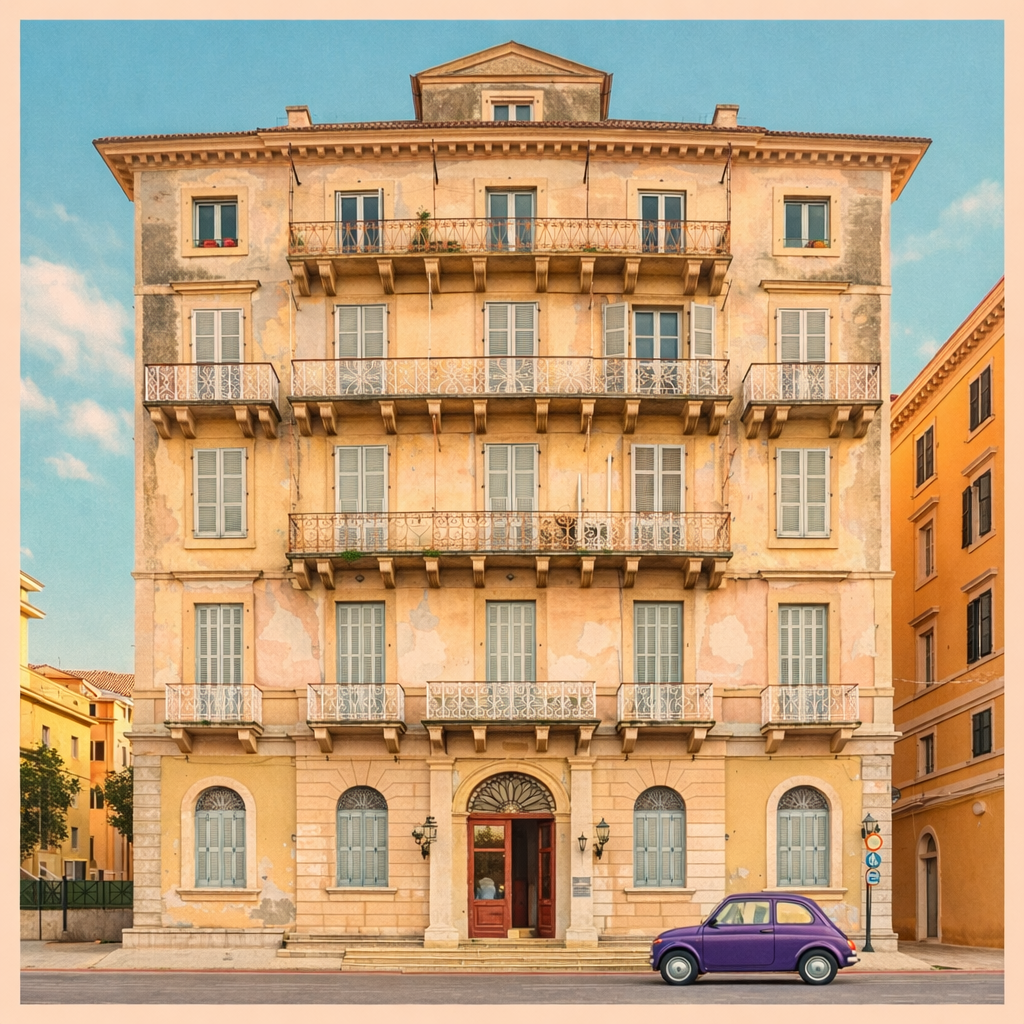


While the rest of Greece spent centuries under Ottoman rule, Corfu stood defiant. For over four hundred years, from 1386 to 1797, the Republic of Venice transformed this strategic island into an impregnable fortress at the entrance to the Adriatic, its Old and New Fortresses holding through every siege. The result is the only corner of Greece where minarets never rose, where Venetian campaniles still pierce the sky, and where narrow kantounia wind between pastel buildings that could have been plucked from the lagoon itself. When Napoleon briefly took the island, his architects added the Liston arcade, modeled after Paris’s Rue de Rivoli. When the British arrived, they built a Georgian palace so neoclassical it reads as a polite architectural argument with everything around it.
Today locals sip coffee under the Liston’s arches, once reserved exclusively for nobles listed in the Libro d’Or, and play cricket on Europe’s largest square, a colonial quirk inside an otherwise Italian dreamscape. Byzantine church foundations support Venetian bell towers topped with baroque facades. Every conqueror left a layer.
Corfu’s Old Town is not a single place. It is a palimpsest, and every empire is still legible.
 39.6242621, 19.9216777