
 Login
Login
 login / signup















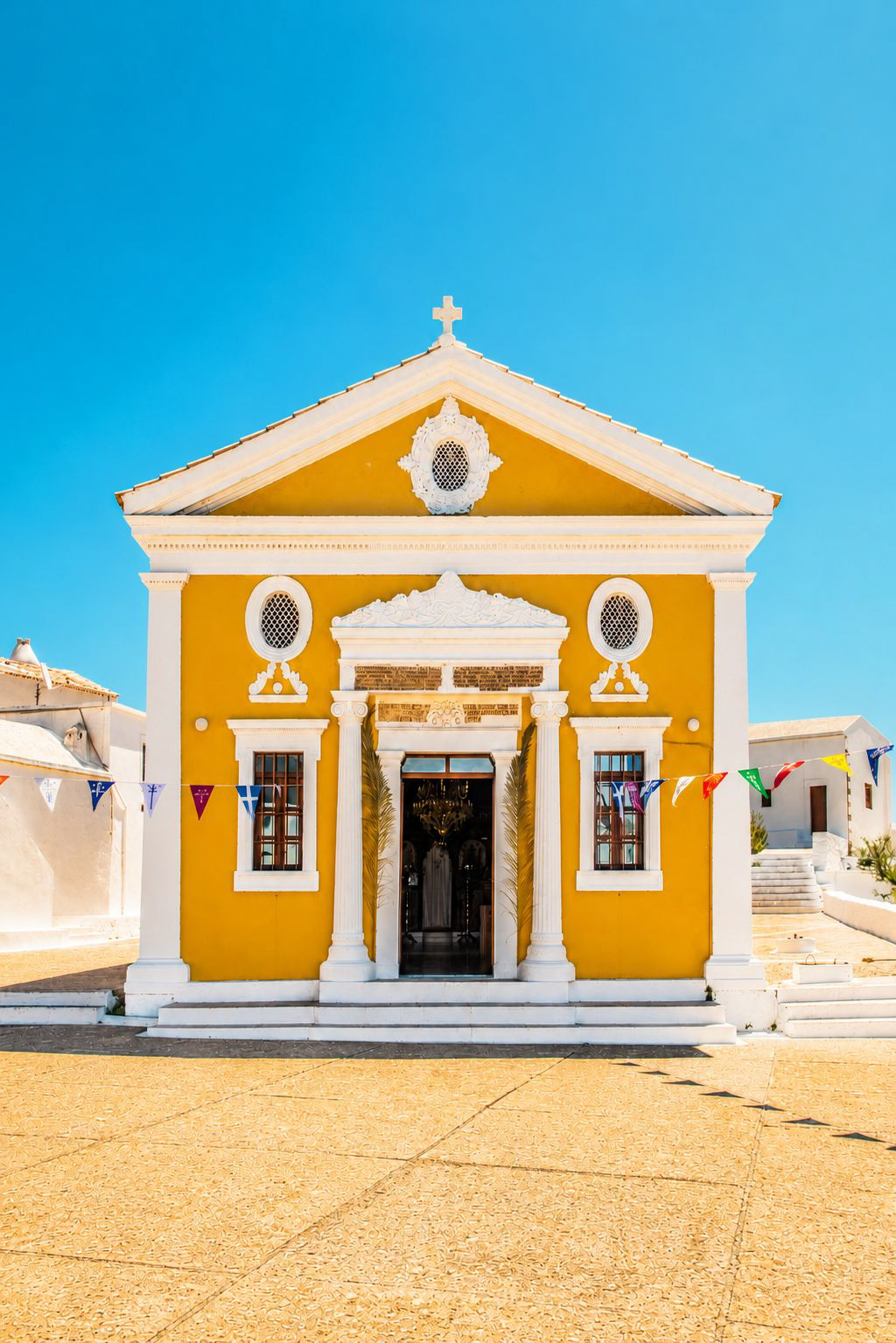


In 1840, Theodoros Kolokotronis, Greece’s most celebrated independence hero, kept a battlefield promise. After leading guerrilla bands to victory against the Ottoman Empire, the aging general returned to rebuild a remote Kythiran monastery, fulfilling a vow he’d made to the Virgin Mary. A century later, during Nazi occupation, a priest in those same monastery cells would operate a clandestine radio, feeding intelligence to Allied forces about incoming German ships. The monastery’s icon, inscribed “The only hope,” had survived a lightning strike in 1767 that incinerated everything around it, launching two centuries of improbable rescues.
Agia Moni sits on a clifftop above Diakofti port, in a spot too strategic to be accidental. From its perch, the monks could see across the island and out to the Peloponnese coast, the same sightline that made the site useful to a wartime radio operator generations later. It’s one of several monasteries scattered across Kythira, a small island that, for its size, ended up with an outsized concentration of clergy watching its coastline, first for the sake of prayer, later for the sake of the Allies.
 36.2565101, 23.0623201