 Login
Login
 login / signup














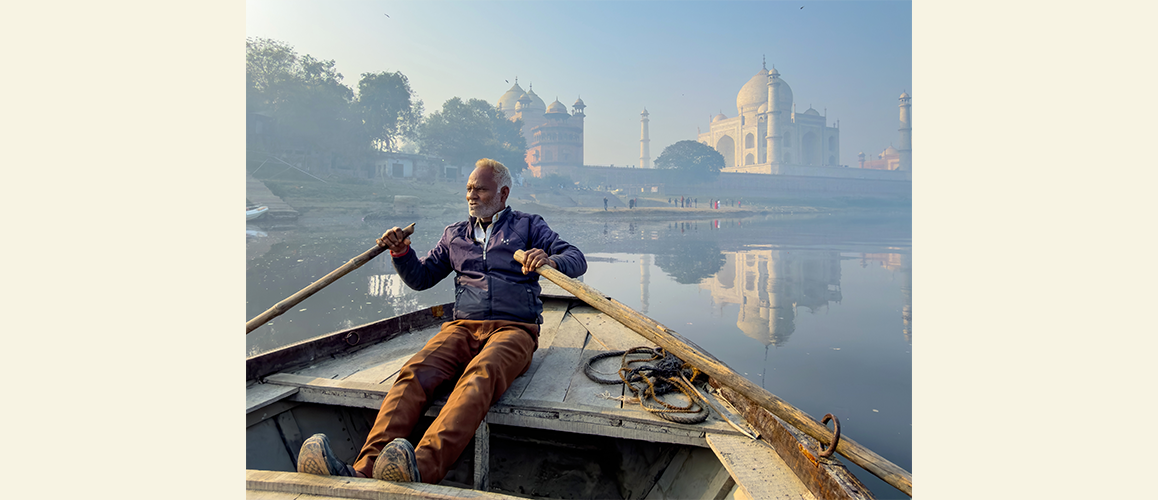
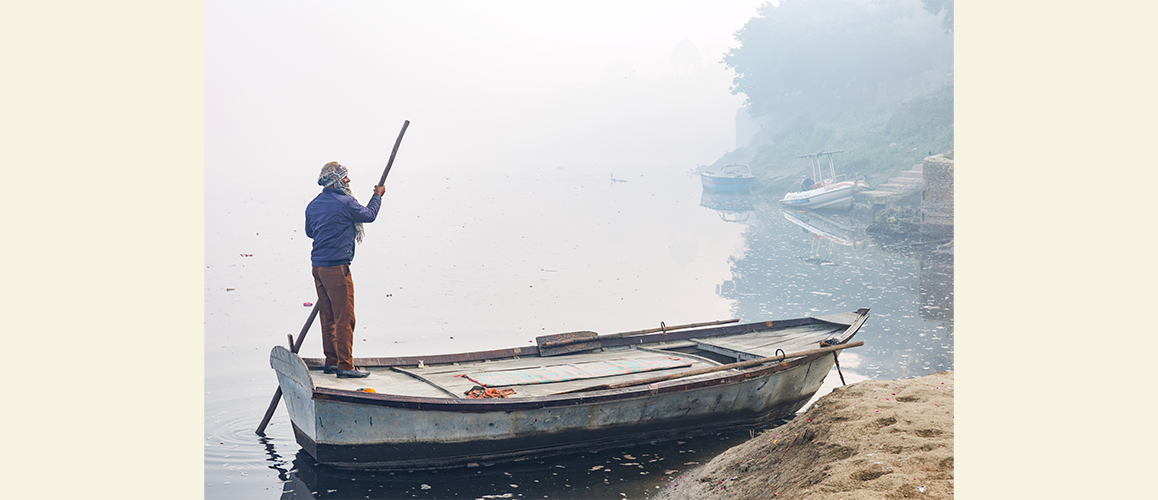
Officially speaking, it is illegal to ferry tourists around on the Yamuna river. But that does not mean it isn’t possible. A few years ago, the government banned boat rides at the Taj Mahal, citing security concerns, but one man, and his one boat still float on.
There’s no ticket office, no signage, no other operators. Some days people gather along the river and wait. A few guides who are in the know yell out for Manoj by name from the banks. If he is available, he will come. If he is busy, he will yell back and let them know. A few guides once pooled their money to buy him a cell phone, but he doesn’t have it anymore.
/ 2
There is no planning ahead, or reserving a time-slot – when passengers step off, the next group negotiates a price and climbs in. Depending on how that conversation goes – and how much your camera gives you away – you’ll pay somewhere between 500 and 800 rupees. Needless to say, it’s cash only.
The Yamuna was once a primary route through the region, linking Agra to Delhi. When the Taj Mahal was built, it was conceived in relation to the river – a complex spanning both banks. Mughal nobility arrived by boat, approaching from the water. The grand gardens tourists queue through today were never meant to be the main entrance.
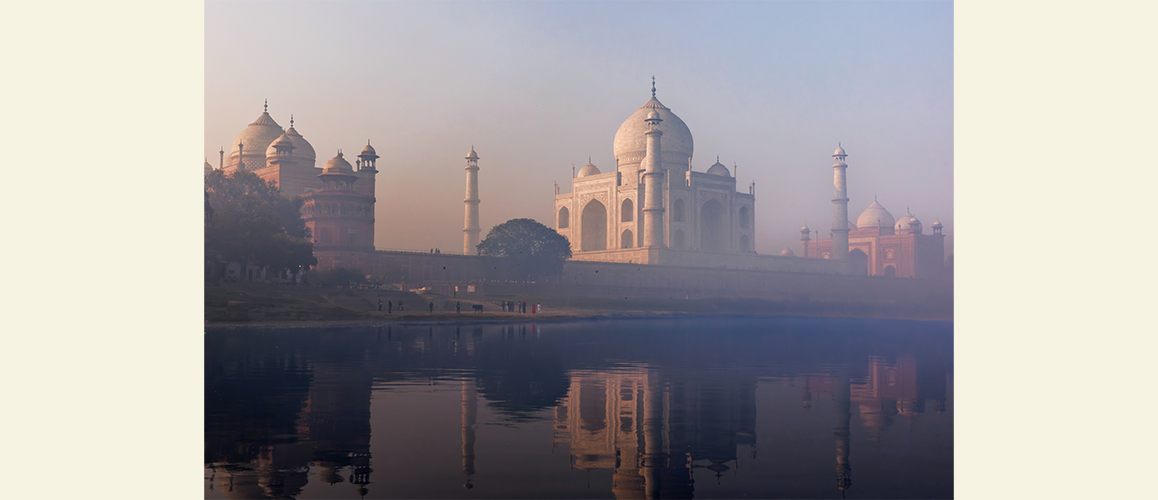
From the river, it all makes sense. The water acts as a mirror, reflecting the structure, doubling its proportions, its already immense presence. The marble platform, the minarets, the dome – all designed to be witnessed by royalty approaching by boat, not on foot.
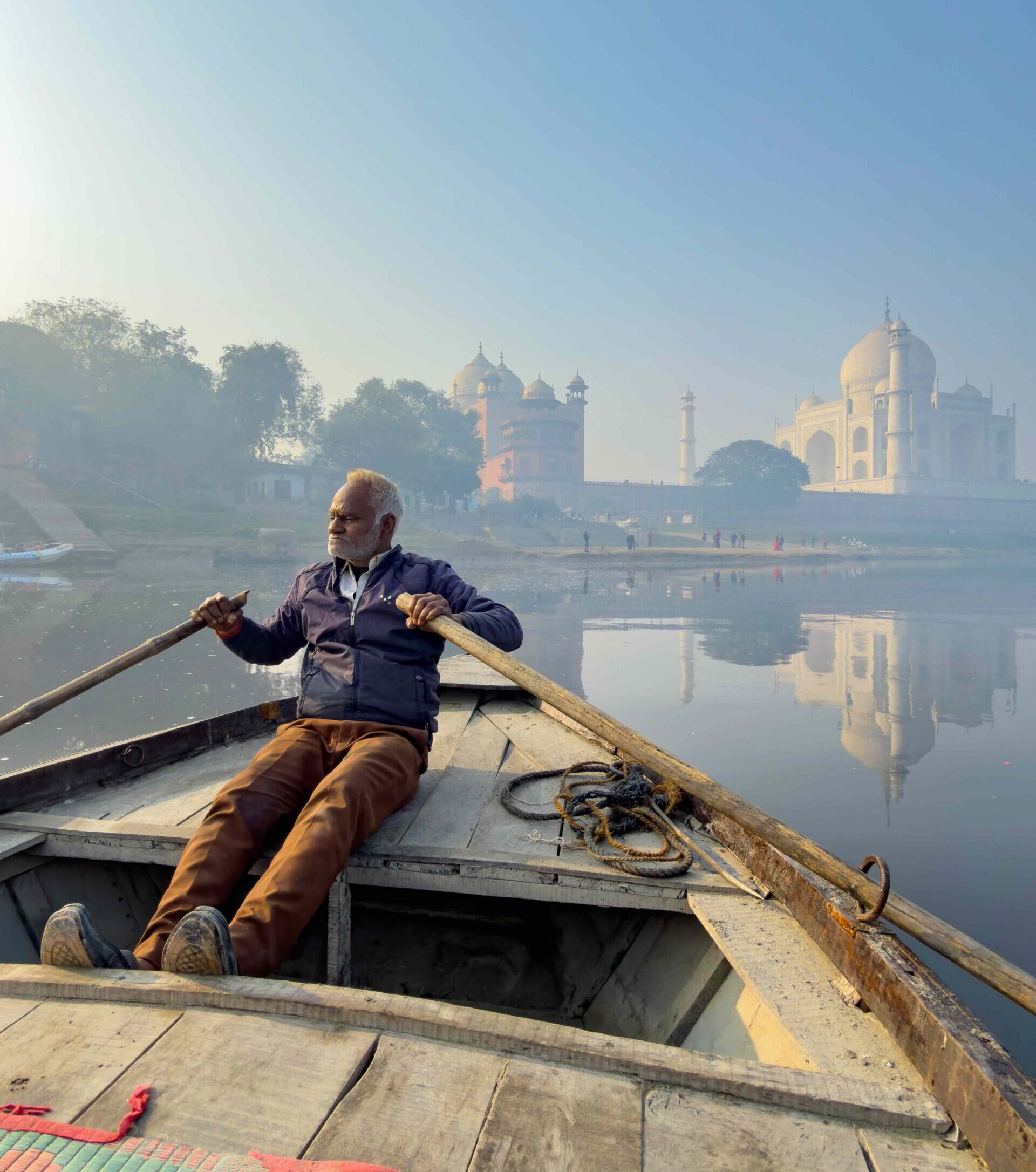
Today, it’s just Manoj. He shows up around sunrise and stays until about 10:00am – no schedule, no contact, no guarantee. Some mornings, as bells ring from a nearby Krishna temple, the riverbank is empty; others, a loose line forms with couples shooting pre-wedding photos or photographers waiting for the best light.
The best conditions come in winter, when the sun rises behind the Taj and fog settles over the Yamuna, flattening the horizon. For a short window, the monument hovers.
One boat, one operator, and one of the few remaining views of the Taj Mahal that doesn’t come with crowds – or permission.