 Login
Login
 login / signup













When Galileo arrived in Padua in 1592, he was fleeing Pisa’s meager salary. Within a few years, his mathematics lectures drew such massive crowds that the university gave him the Great Hall – the largest classroom on campus, normally reserved for law faculty. Students packed in to hear him challenge Aristotle’s astronomy, lectures that could get you killed in most of Europe. He would later call these 18 years the happiest of his life.
Padua offered something rare in Renaissance Europe: distance from Rome. As part of the independent Republic of Venice, the university existed beyond the Pope’s direct jurisdiction, giving scholars room to test ideas that elsewhere might earn you a visit from the Inquisition. Galileo took full advantage. By day, he taught mathematics, military engineering, and fortification design to noblemen and soldiers. By night, he supplemented his income building and selling scientific instruments from a workshop near the university – teaching nobles how to aim cannons, then going home to grind telescope lenses and sell military compasses to pay his family’s bills.
Despite his growing reputation, money was a constant problem. But the financial pressure kept him tethered to practical questions – measuring distances, calculating trajectories, designing instruments precise enough to map the physical world.
Then, in January 1610, everything changed.
Using an improved telescope developed during his years in Padua, Galileo turned his gaze toward Jupiter and noticed four small points of light nearby. Over successive nights, they shifted positions. They were not stars. They were moons orbiting another planet: the first objects ever observed circling something other than Earth.
Galileo left Padua later that same year, eventually facing the controversies for which he is best remembered. But it was here, in a city whose motto promised “Paduan Liberty, Universal and Complete for Everyone,” that he did the work that would make him dangerous everywhere else.
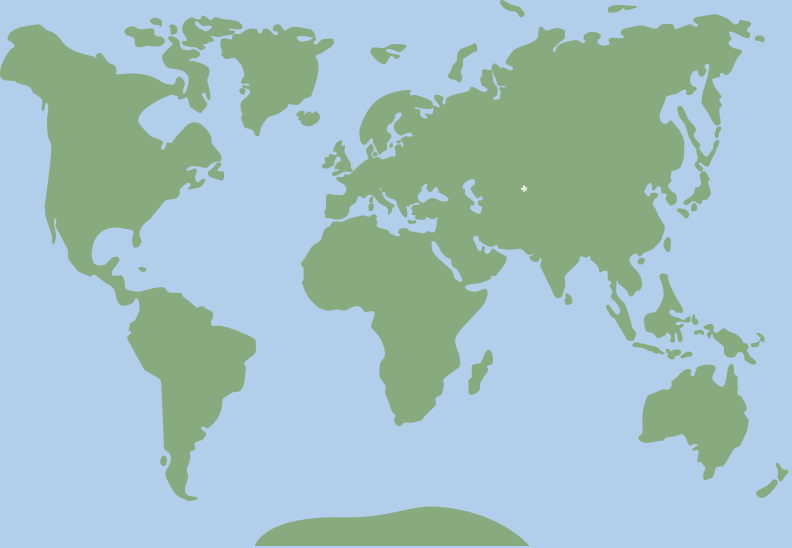 45.4105029, 11.8782071