
 Login
Login
 login / signup















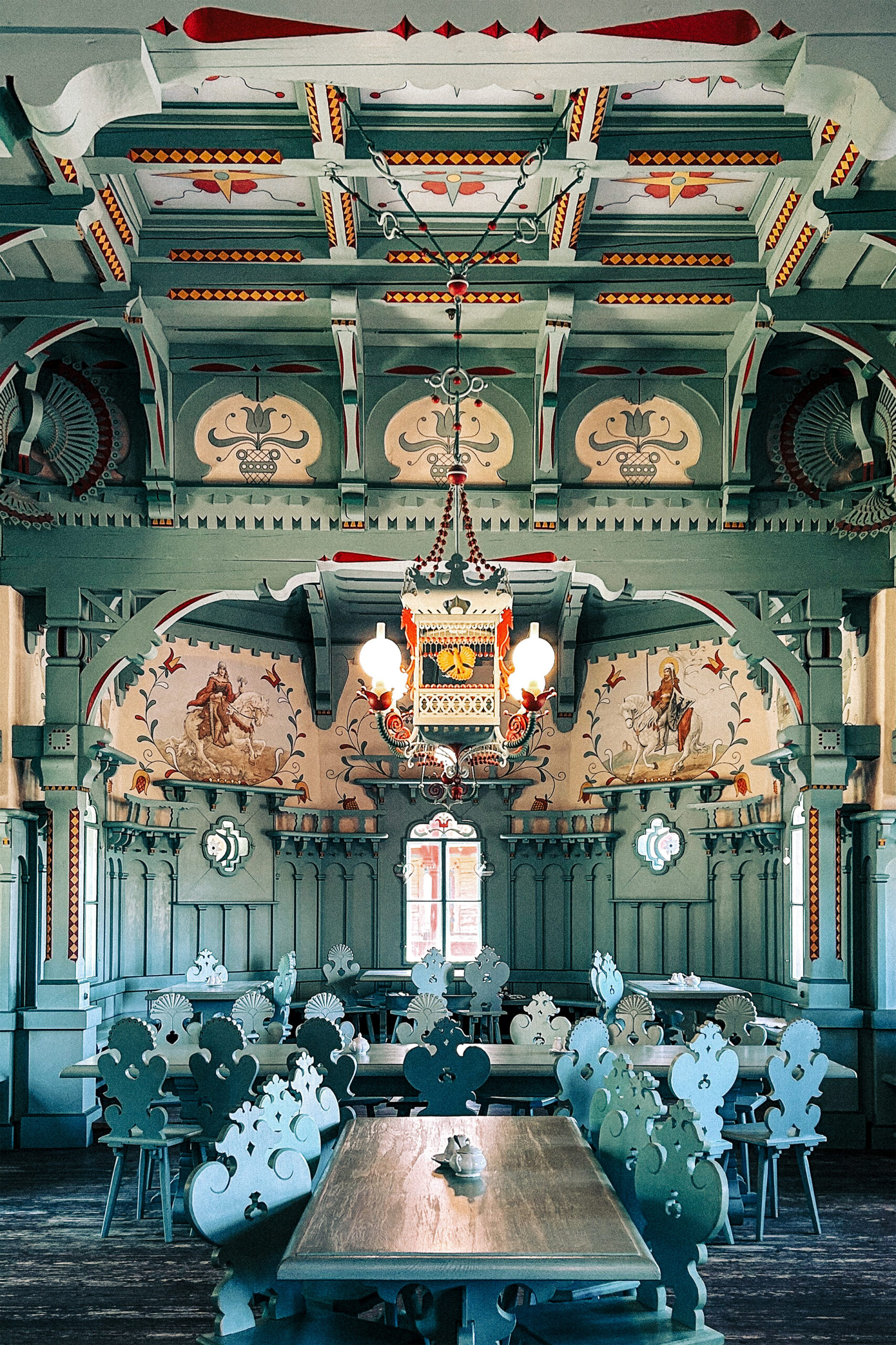


In 1899, Slovak architect Dušan Jurkovič built two wooden lodges at Pustevny, a mountain pass in the Moravian Beskids, and fused Wallachian folk architecture with Art Nouveau flourishes in a way that earned him the title “poet of timber.” Libušín and Maměnka sit side by side at the top of the pass, their carved eaves and ornate facades belonging to no single tradition and somehow to all of them at once. The dining hall at Libušín featured frescoes of legendary robbers and pagan gods, which is one approach to interior decoration.
In 2014, Libušín burned. What remained was enough to work from, but only barely. The reconstruction took six years and proceeded according to principles that the original builders would have recognized: trees were felled after the full moon, when sap flow is lowest and the timber more resistant to weathering. Every plank was hand-planed. Century-old beams that had survived the fire were incorporated back into the structure. The craftsmen were not restoring a building so much as continuing an argument about how things ought to be made.
Both lodges are now national cultural monuments, which is the Czech Republic’s way of saying that losing them again is not an option. Maměnka still stands as Jurkovič left it. Libušín stands as he would have wanted it, which required burning down first.
 49.4437568, 18.2557434