Login
 login / signup











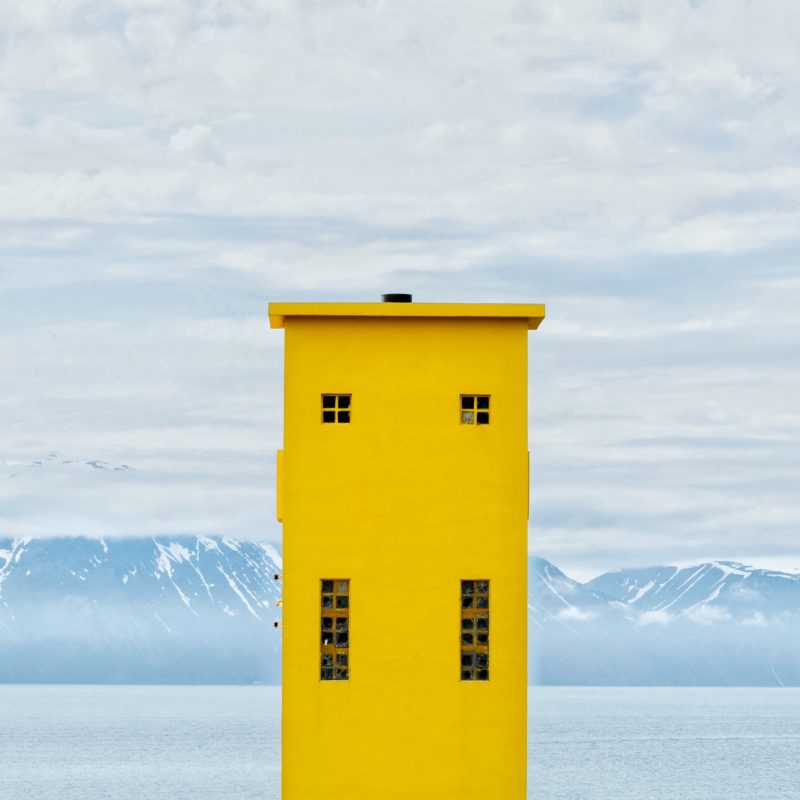

Husavik, Iceland
Húsavik Light
This semicircular-cylindrical light house guards a fishing village in Iceland.





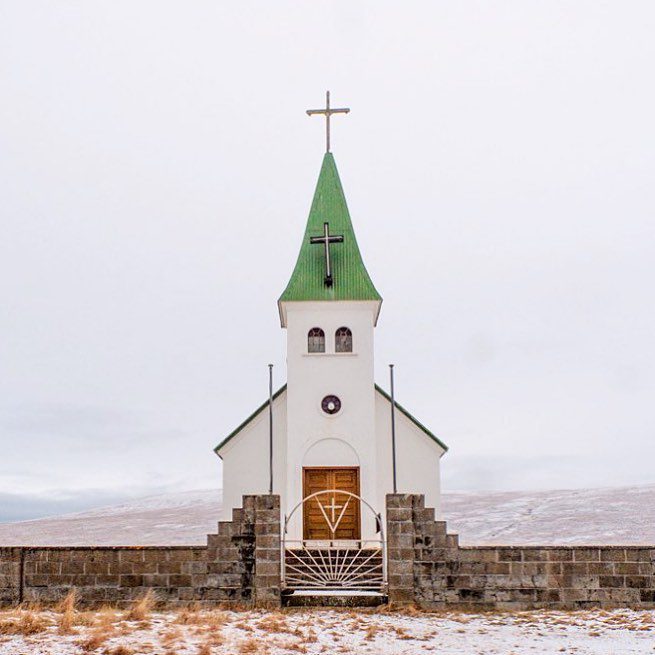
Reyðarfjörður, Iceland | C.1910

Tuberculosis forced Rögnvaldur Ólafsson to abandon his architecture studies in Copenhagen in 1904, cutting short his formal training before it was complete. Yet he would still come to be regarded as Iceland’s first architect, designing roughly 150 buildings in little more than a decade before the same disease claimed his life at 42.
His career unfolded at a moment when Iceland itself was being rebuilt in a new material. Concrete, or *steinsteypa*, was spreading across the island, gradually replacing centuries-old traditions of turf and timber construction. In 1910, more than half of Iceland’s residential buildings were still primarily or entirely made from turf, even as buildings like Reyðarfjarðarkirkja began pointing toward a very different architectural future.
Built that same year on Iceland’s eastern coast, the church became part of a broader shift from earthbound dwellings to engineered structures, one taking place alongside the country’s rapid social and political transformation. The building would be altered several times over the decades, including renovations in the 1970s, but its origins remain tied to that pivotal moment in Icelandic architecture.
Elsewhere that year, Rögnvaldur was working on another concrete landmark: the tuberculosis sanatorium at Vífilsstaðir in Garðabær. The connection gives his story an almost cruel symmetry. The illness that had sent him home from Copenhagen also shaped one of his most significant commissions, and in 1917, after years spent helping define a new architectural language for Iceland, Rögnvaldur died at Vífilsstaðir, inside the sanatorium he himself had designed.
Partner


This semicircular-cylindrical light house guards a fishing village in Iceland.
This Icelandic church's cemetery plays a major role in a popular Icelandic ghost story.
The Old Gardur Lighthouse in Iceland was built low enough to the ground to avoid mist but as a result is always in danger from high surf.
This Argentinian basilica is home to a famous icon and 15 bells, each with a different name and motto.
It started with an avalanche and a flask of Holy Blood.
This Icelandic church's cemetery plays a major role in a popular Icelandic ghost story.
Max file size is 40MB. JPEGs are preferred.
You do not have permission to view this form.